Affiliation: University of Illinois at Chicago
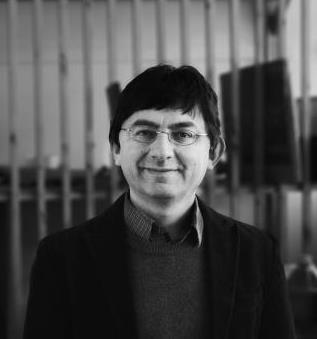
Ömür Harmanşah is Associate Professor of Art History at the University of Illinois at Chicago; he holds his degrees from the Middle East Technical University in Ankara (MA) and the University of Pennsylvania (PhD). His areas of specialization include the art, architecture and material culture of the ancient Near East and the Eastern Mediterranean world, with an emphasis on Mesopotamia, Anatolia, and Syria during the Bronze and Iron Ages. His past field projects include the “Political Ecology as Practice: A Regional Approach to the Anthropocene” Project (Hunza Valley, Northern Areas in Pakistan), the Yalburt Yaylası Archaeological Landscape Research Project (Ilgın-Konya Province, Turkey), and the Gordion/Yassıhöyük Archaeological Project. Professor Harmanşah was an AIA Kershaw Lecturer for 2019/2020 and is a Norton Lecturer for the 2025/2026 cycle.
Since 2010, the Yalburt Yaylası Archaeological Landscape Project has surveyed the southwestern borderlands of the Hittite Empire in the districts of Ilgın and Kadınhanı of Konya Province in Turkey. This is a regional landscape history project that investigates the politics of water and politics of ecology during the Bronze and Iron Ages, especially at the time of the Hittite Empire in the Late Bronze age. During the survey, Karaköy Kale Tepesi (Ilgın) was identified as a well-preserved Late Bronze Age fortress with a substantial lower town overlooking the narrows of the Bulasan River Valley, connecting the Ilgın and Atlantı plains. Its fortress is constructed of monumental ashlar blocks right above a copious spring; its water management system and the monumental structures surrounding the fortress present a new urban form for understanding Hittite regional centers. The team also documented the Hittite marl quarry of Yıldıztepe on a ridge connected by a saddle to the Kale Tepesi outcrop and only 1.2 km south-southeast of the fortress and the adjacent settlement of Bağlar Mevkii, which allowed the dating the construction of the fortress to 16th or early 15th century BCE. The proximity of this urban settlement to the Köylütolu Earthen Dam (known to have been built by the Hittite Great King Tudhaliya IV based on its Hieroglyphic Luwian inscription), confirmed that this is a key urban site for the entire region during the Late Bronze Age. In this paper, we report on the results of fieldwork carried out at Karaköy Kale Tepesi, using non-invasive methods of urban survey and landscape archaeology during the 2021 and 2025 seasons.
During the Iron Age, numerous Syro-Anatolian cities were built with the new and experimental architectural technology of carved orthostats which embellished their public buildings and urban spaces from Karkamish to Malatya. Phyrgian cities such as Ankara and Gordion participated in such shared spatial politics. The excavations at the mound of Yassıhöyük (identified with ancient Gordion) provide some of the most reliable and detailed stratified archaeological evidence for a nuanced understanding of the urban history of an Anatolian Iron Age citadel. After the collapse of Late Bronze Age imperial network in Anatolia and the Eastern Mediterranean world, Yassıhöyük slowly emerged as a new Anatolian capital city where the urban space is produced with innovative architectural technologies, building forms, and a brand new repertoire of visual representation that linked this Phrygian center to the cultural realm of the emergent Syro-Hittite states in Northern Syro-Mesopotamia and Southeastern Turkey. From the last century of the 2nd millennium BCE to the massive destruction of its citadel, which is now dated to 830-800 BCE based on radiocarbon dating, dendrochronology, and meticulous study of stratified evidence (Rose and Darbyshire eds. 2011), Yassıhöyük citadel witnessed several phases of building projects and architectural experimentation, as well as the introduction of cut stone masonry and carved stone orthostats in monumental architecture. This paper reviews the archaeological and architectural evidence for such an innovative period of rapid development in the urban history of the city and suggests that the building projects at Gordion could be compared to the idea of urban foundations, known from the Assyrian Empire, Syro-Hittite states and Urartu further East.
This lecture investigates how the current regime of climate change and the global ecological crisis in the age of the Anthropocene impact the way we write histories of landscapes and places, the way we conduct fieldwork, and engage with communities of heritage. In the early 2000s, environmental scientists proposed a new geological epoch called the Anthropocene, highlighting the scale of human impact on earth’s geology and ecosystems. What are the responsibilities of academics in the humanities and social sciences in a changing climate and ecological crises? Historians point to the implications of our moment of global anxiety on how we write history, urging us to reconsider historical fundamentals such as the nature/culture divide, prioritization of human over geological time, and questions of agency, freedom, and progress. Engaging with the methodological challenges to the study of landscapes brought by the onset of the Anthropocene and what Bruno Latour has called “the new climate regime”, the lecture advocates for a return to on-the-ground fieldwork in archaeological and historical landscapes. Presenting my field experiences from two different projects in south central Turkey and the Hunza Valley in the northern areas of Pakistan, I will frame a fresh concept of fieldwork as affective and often performative form of engagement with the world and its local communities. In the lecture, we will build the concepts of place and landscape as a unit of human experience of the world and their documentation through creative fieldwork.
The new visual politics of our contemporary moment includes spectacles of cultural heritage destruction on global media. Since the early 2000s, we have seen that audio-visual media is mobilized or activated with the powerful tool of imagery of heritage violence to harm local communities and push forward military agendas on the ground. Iconic images of the performative destruction of monuments have marked a very important shift in the 2000s and coincided with the debates on climate change and the ecological crisis. This new form of heritage violence, referred as “performative iconoclasm” was carried out with a lot of media coverage which was made available to global news outlets and serviced to social media platforms. A highly memorable and harmful example of this was the dynamiting of the colossal rock-cut Bamiyan Buddha statues in the Bamiyan valley in Afghanistan by the Taliban, which I see as a turning point in the history of critical heritage studies, presenting a radical challenge to heritage professionals that they had never encountered at this scale before, and didn’t know how to respond. What connects several of these choreographed performances of heritage violence? First and foremost, they were presented as historical reenactments of past iconoclastic events. Secondly, the destructions preceded by some kind of edict or proclamation that historically situated the act and justified it. Third, the choreographed or performative destruction was carefully documented by the media apparatuses and serviced to global media channels. This model was taken up by the Islamic State (ISIS) in 2014-2015. Destruction of urban and rural monuments in Iraq and Syria occupied most of the public attention on cultural heritage for a few years. For instance the demolition of monuments at the archaeological site of Palmyra during the Islamic State’s occupation of the site, the highly choreographed performance at the archaeological site of Nimrud, targeting the wall reliefs at the Northwest Palace of Assurnasirpal II of the 9th century BCE, and the release of profoundly eerie and powerful images to the global media, have been then etched into our memories. Why are we living through this kind of violent turn in cultural heritage? Who are these actors, and what are their intentions for such spectacles of violence? This lecture explores this new challenge in cultural heritage studies through a critical analysis of the politics of visuality in global media.
In the field of ancient art, we tend to study things in their future self. What does it mean to describe, analyze, and interpret archaeological things, and tell stories about artifacts passed down to us from cultures of deep antiquity? Could this be characterized as the study of the deep futurity of those objects? Were these futures anticipated, desired, or dreamed of at the time of their making? In Mesopotamian and Anatolian rock-carved monuments such as stelae, rock reliefs, and architectural orthostats, we often come across expressions of a desire towards futurity. We mobilize various technologies of translation and decipherment alongside the forensic study of the artifact’s relic ontology to stabilize the object into its heritage status in the material archive of the past, which is then representationally linked to an episode of deep antiquity. Maria Stravrinaki recently identified this as the “unexpected contiguity of the symbolic and the geological” in her discussion of the concept and imaginary of prehistory as an invention of the 19th century (Stravrinaki 2022: 12). The weathered geological substance of the archaeological object registers as an index of deep temporality while at the same time transmitting its symbolic content. In this paper, I explore the materiality and temporality of the stone architectural monument, and argue that rock-carving technologies borrow the geological (slow) temporality of the rock. Thinking through the perspective of the futurity of archaeological things and applying them to rock cut images and inscriptions, in this paper, I consider how one would make sense of an image or inscription carved on the surface of the living rock? Thinking beyond the visual content of the image, how does one articulate the creative and materially enduring, tectonic act of embedding an image into a geological surface?