Affiliation: American Center of Research in Amman, Jordan
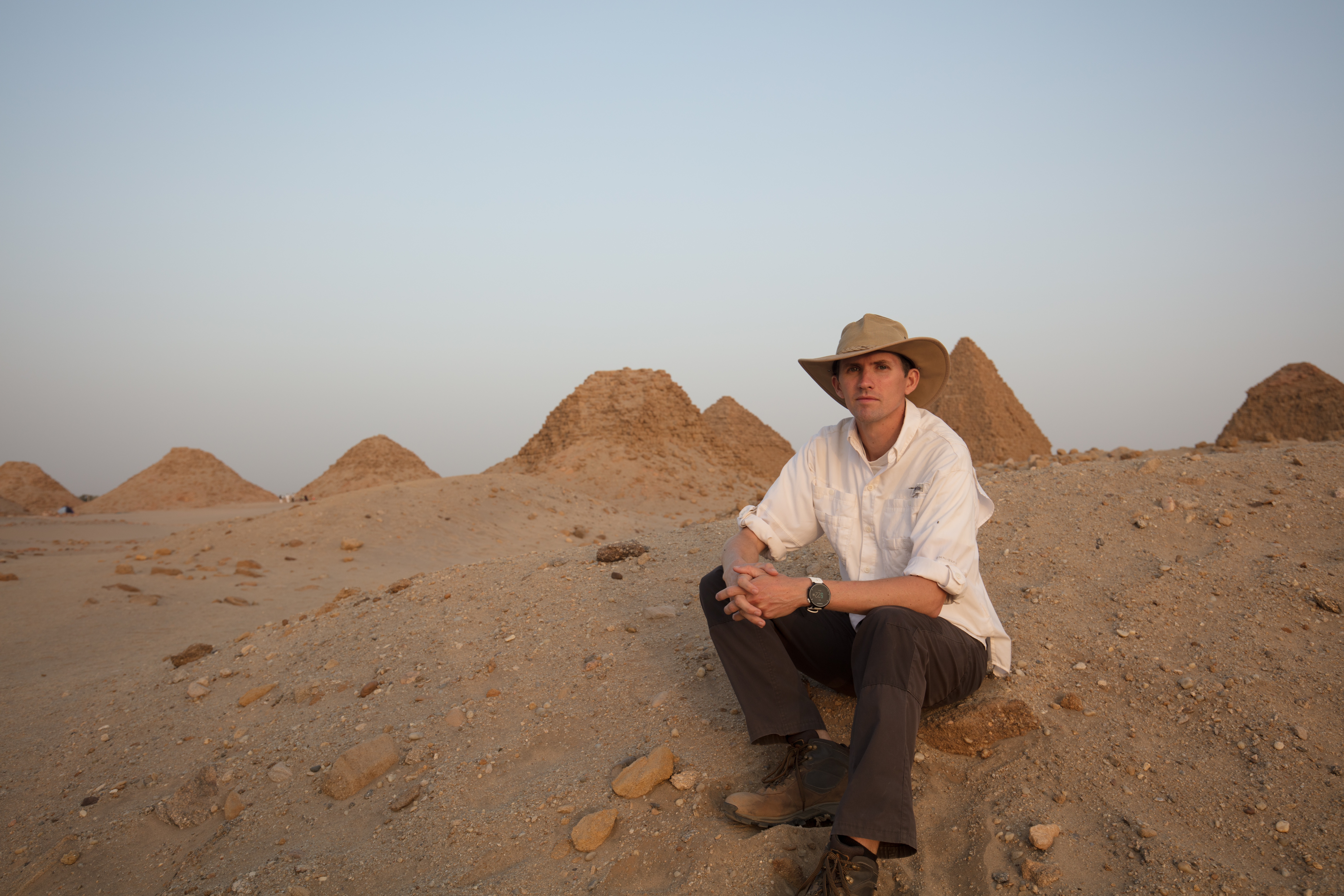
Prof. Pearce Paul Creasman serves as executive director of the American Center of Research in Amman, Jordan. His research focuses on the ancient heritage, archaeology, and environment of the Middle East and North Africa. With more than 100 publications to his credit, Prof. Creasman has been widely recognized for his work, including by the White House’s Office of Science and Technology Policy, as a fellow of The Explorer’s Club, and he was honored as a “Genius” in National Geographic’s almanac. His most recent excavations are of the Treasury in Petra (Jordan) and the pyramids of Nuri (Sudan), both UNESCO World Heritage Sites, as well as underwater in the Dead Sea at an ancient harbor.
Nestled in the rose-red sandstone cliffs and surrounded by the deserts of what is today southern Jordan, the archaeological site of Petra is one of humanities greatest wonders. Hewn from canyon walls, the rock-cut city thrived for centuries as the capital of the ancient Nabataean people. Most often recognized by Al Khazneh (The Treasury), an enigmatic but stunning structure, the city of Petra sprawled for miles. An illustrated lecture will introduce the Nabataeans, note the historic travelers who helped bring the site to the Western world’s attention, and discuss the recent archaeological work growing our understanding of Petra’s history, including 2024 excavations under The Treasury itself.
The Dead Sea does not want to give up its secrets. At ten times the salinity of an ocean it rusts equipment on contact and one drop of its waters in an eye blinds. The Jordanian coast of the Dead Sea is rocky, steep, and nearly as inhospitable as the water itself. Yet, nestled against the sea is a lone valley that has thrived and been regarded as a place of healing for millennia: ‘Ain ez-Zara. Called Kallirhoe (“good spring”) in the ancient world, this remote harbor town was a place of freshwater springs and spas, notably visited by Herod the Great. While the land area of its port has been known for decades, the harbor waters remain a mystery. In November 2023, underwater survey and excavation was attempted, with remarkable findings. We identified several possible stone structures that would have been near that period’s shoreline. We also experienced underwater environmental conditions reported to have disappeared half a century ago. Representing the first underwater excavation ever conducted in the Dead Sea, we learned much, but the challenges were many and there is much more yet to learn.
The pyramids and necropoleis of Nuri, Sudan, compose one-fifth of the UNESCO World Heritage Site of “Napata” in Sudan. Nuri’s 20 standing pyramids mark the burials of Nubian rulers from the kingdom of Kush, dating from the Napatan period (900-270 BCE). Hundreds of other burials, temples, and monuments spanning millennia cover the 7,500,000+ square feet of the site. The largest pyramid marks the burial of Taharqa (690-664 BCE), the most famous of ancient Egypt’s 25th Dynasty pharaohs, and who is mentioned in the Bible. Taharqa and his relatives brought about a renaissance in art and architecture in Egypt and Nubia. Since 2018, we have been excavating numerous areas of the site, but this talk focuses on the excavation of the pyramid and burial of king Nastasen (died ca. 315 BCE) – the last king buried at the site. Nastasen’s subterranean tomb is now submerged due to rising groundward, requiring novel adaptation of underwater archaeological techniques to “dive the pyramid.”