Affiliation: The Field Museum
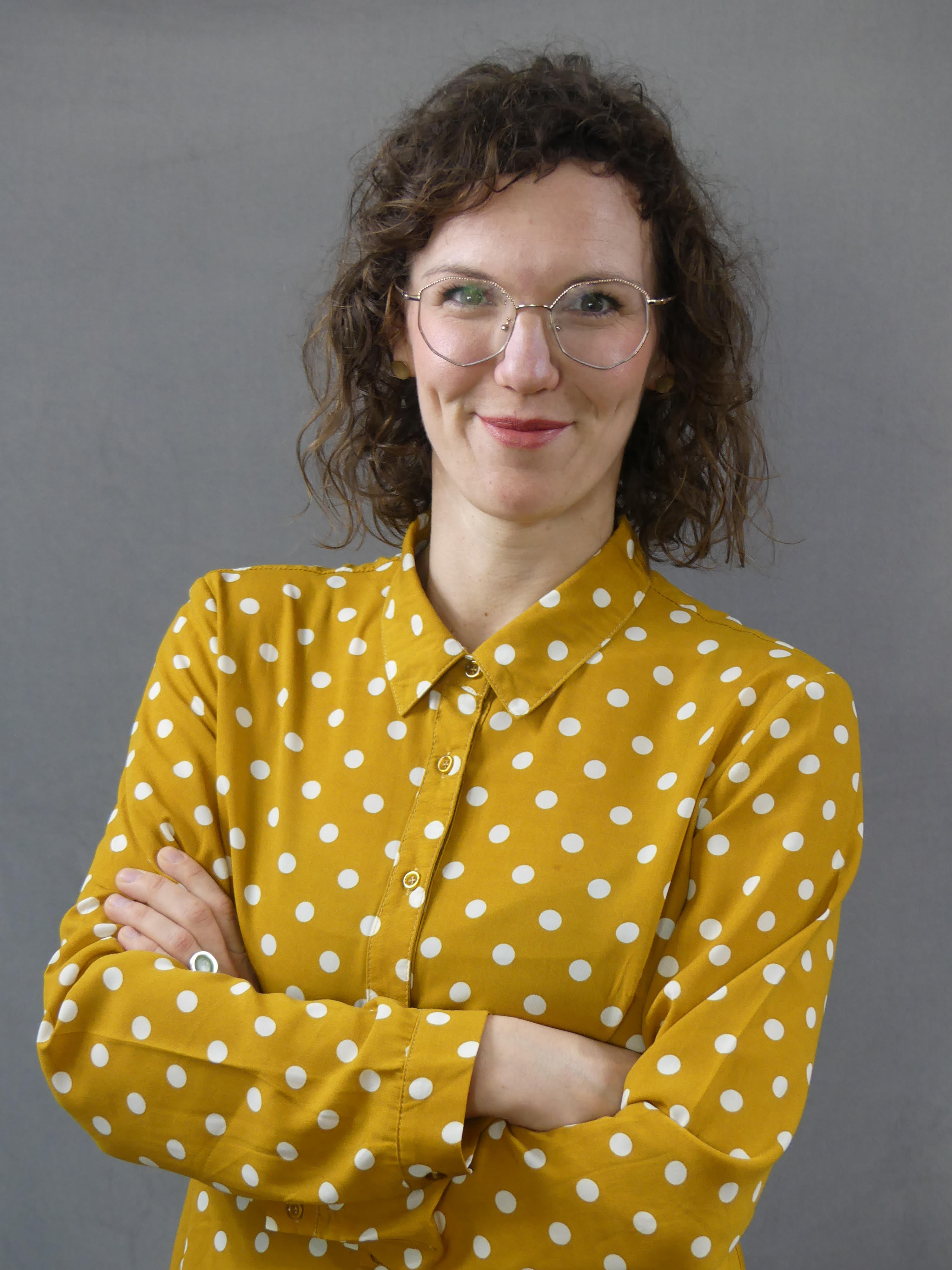
Sabina Cveček is a Marie Skłodowska-Curie Global Postdoctoral Fellow at the Field Museum in Chicago and the Austrian Academy of Sciences in Vienna. Her research concerns contextualizing prehistoric households, kinship, and social organization in the eastern Mediterranean from socio-cultural anthropological perspectives. She holds PhD in socio-cultural anthropology from the University of Vienna (2021). Previously, she was a visiting researcher at the Max Planck Institute for Social Anthropology in Halle/Saale and an IFK Junior Fellow at the International Research Centre for Cultural Studies in Vienna. Cveček is an elected Fellow of the Royal Anthropological Institute, a co-chair of the Archaeology and Gender in Europe network of the European Association of Archaeologists, and the incoming At Large Director at the Coalition for Archaeological Synthesis (CfAS). Her recent publications include Enthrone, Dethrone, Rethrone? Multiple Lives of Matrilineal Kinship in the Aegean Prehistory (Archaeological Dialogues), Why Kinship Still Needs Anthropologists in the 21st Century (Anthropology Today), and her book, Çukuriçi Höyük 4: Household Economics in the Early Bronze Age Aegean, was published in 2022 by the Austrian Academy of Sciences Press.
Kinship has long been central to anthropological research, yet in archaeological inquiries, it has often been assumed rather than systematically explored. This talk reconsiders the relation between the dwelling spaces, spatial proximity, and genetic distance based on available ancient DNA analysis in the Neolithic of southwestern Asia (6,600–5,000 BC) through the lens of kinship. Drawing on evidence from domestic and mortuary contexts in which genetic relatedness does not necessarily correspond to spatial proximity, I address alternative ways in which persons could become kin. By expanding the concept of kinship within broader frameworks of the more flexible forms of relatedness, this talk will offer new insights into making kin during the Neolithic in southwestern Asia. Ultimately, I show how ethnography and comparison remain crucial for kinship analysis in an archaeological setting to acknowledge not only genetic but also socially constructed relationships in shaping past human communities.
Were ancient Aegean communities matriarchal, matrilineal, or matricentric? This question has intrigued archaeologists for generations. Early interpretations of ancient figurines as Mother Goddesses were challenged by feminist scholars who questioned such interpretations as overly simplistic. Recently, however, ideas about female-centered social organization and matrilineal kinship—where family ties trace through the mother’s line—have re-emerged. In this talk, Sabina Cveček examines why scholars have argued for matrilineal kinship and possible female rule in the Neolithic and Early Bronze Age Aegean. By looking at the interpretation of settlements, figurines, and archaeological contexts, Cveček discusses how different types of evidence have been used to support this idea. Drawing on ethnographic insights, Cveček shows that matrilineal kinship does not necessarily imply female rule, a crucial distinction for a more rigorous understanding of gender dynamics, kinship relations, and socio-political organization in ancient communities.