Affiliation: University of California, Los Angeles
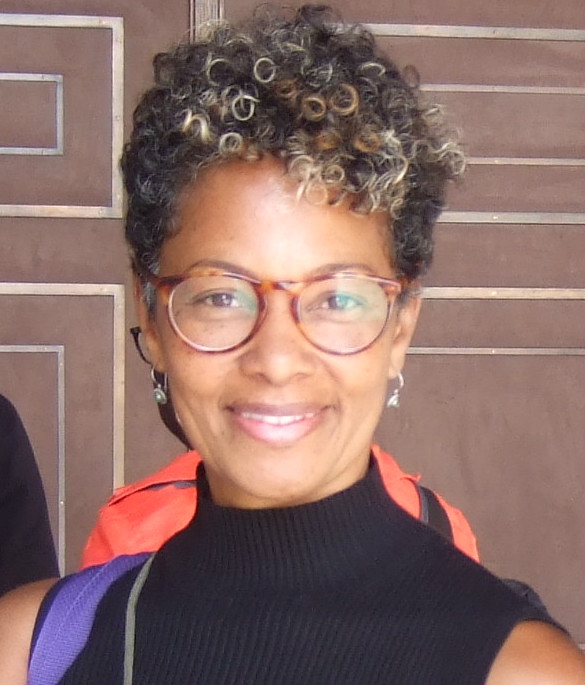
Solange Ashby is an Assistant Professor in the department of Near Eastern Languages and Cultures at UCLA where she teaches Egyptology and Nubian Studies. Dr. Ashby’s expertise in ancient languages, including Egyptian hieroglyphs, Ethiopic, and Meroitic, underpins her research into religious transformation in Northeast Africa. Her book, Calling Out to Isis: The Enduring Nubian Presence at Philae, explores the Egyptian temple of Philae as a Nubian sacred site. Her second book, a co-edited volume, New Perspectives on Ancient Nubia, was published in August of 2024. She is currently working on a monograph about Nubian women in their royal, cultic, and kinship roles, which is under contract with Princeton University Press.
In Ethiopia today, nominally Christian prayer scrolls are worn as a form of protection against diseases believed to result from the negative actions of demons. The scrolls are written in the ancient liturgical language of the Ethiopian Coptic Church, Ge’ez (Ethiopic).
This paper will focus on one particular type of demon called Barya, which is said to cause epilepsy. Interestingly and not coincidentally, this term is also a racist slur used for members of a specific ethnic group who call themselves Nara. The Nara reside along the western border of Ethiopia and Eritrea and into eastern Sudan. Their people were heavily raided for slaves by Ethiopia’s dominant ethnic group, the Amhara.
Embedded in a 20th century prayer scroll created for a young woman, among the ritual protection meant to safeguard against illness and misfortune, is an “execration text” against several kings, whom I suggest were enemy rulers of the Ethiopian Aksumite empire in the fourth century CE. This text seems to represent a fossilized relic from pre-Christian ritual practice that offered protection against six enemy kings: King of the Barya, King of Nedad, King of Mech, King of kings of Chanafar, an unnamed king, and King Wuqyenos. The inclusion of the term “Noba” as an apotropaic term in the text brings us firmly into Nubia where the Noba people battled Meroitic troops and clashed with the Axumite king Ezana circa 350 CE.
Through a close examination of references to state enemies of the Kingdom of Aksum embedded in a modern prayer scroll, I will explore the numerous ethnicities (Nara, Noba, Meroitic – all Northeast Sudanic speakers) that lived in east African during the 4th century CE, a period of profound change from traditional religious practices to the early adoption of Christianity.
The majority of texts that contain Meroitic language inscriptions are funerary in nature. Of a corpus of about 2000 texts, inscribed funerary monuments dominate with approximately 90% written in the Meroitic cursive script derived from the Egyptian Demotic script. This lecture will use as a case study a third or early fourth century CE funerary stela of two siblings (presumed to be brother and sister) from the Meroitic site of Arminna West in Lower Nubia. Currently on display in the Fralin Museum as part of “The World In Between: Egypt and Nubia in Africa” exhibition, this artifact provides an interesting look into the elites who resided in Arminna West, between Karanog and Faras in Lower Nubia. Engraved in the Meroitic cursive script, the stela comprises 13 lines of text in a late Meroitic style. Its inscription speaks to the importance placed on kinship ties and the administrative and priestly titles that Lower Nubian elites acquired in service to the kingdom of Meroe.
Some of the most exquisite and skillfully crafted jewelry of the ancient world comes from Nubia, a region spanning southern Egypt and northern Sudan. Egyptologist Solange Ashby takes a closer look at adornments worn by priestesses and queens who often served in ritual roles associated with the goddess Hathor. Ashby provides historical and religious context for stunning gold objects excavated in Sudan in the early 20th century, including pieces displayed in the exhibition Nubia: Jewels of Ancient Sudan from the Museum of Fine Arts, Boston.
“Worship of the Egyptian goddess Isis spread throughout the Mediterranean world during more than seven centuries of Greco-Roman rule in Egypt (332 BCE – 395 CE). During this period temples of Isis were constructed in Greece and Rome and into northern Europe. Less well known are the adherents of Isis from the lands south of Egypt in the kingdom of Meroe (300 BCE – 330 CE) and the Nubian priests whom they employed to conduct rites for Osiris and Isis at the temple of Philae.
This lecture will use Heliodorus’ Aethiopica, a Greek romance of the third or fourth century CE, as an entry point to discover the “other” great civilization of the Greco-Roman world, Meroe. Heliodorus’ protagonist, a young priestess of Artemis from Delphi in Greece, journeys to the “cataracts of Egypt” and the temple of Isis before arriving in Meroe to discover that she is a Meroitic princess. This talk will discuss what Heliodorus got right – and wrong! – about the actual Meroitic priests and worshippers of the goddess Isis, contemporaries of Heliodorus, as described through their prayer inscriptions written in Egyptian Demotic, Meroitic, and Greek on the walls at the temple of Philae and the decorated funerary chapels of the royal pyramids at Meroe.
The prominence of powerful goddesses (Hathor, Mut, and Isis), the reverence awarded to the queen mothers of Kush, and a series of sole-ruling queens who led their armies in battle against the invading Romans in the period just prior to Helidorus’ Aethopica, highlight the unusually high status of women in this ancient African society.”