Affiliation: The Field Museum
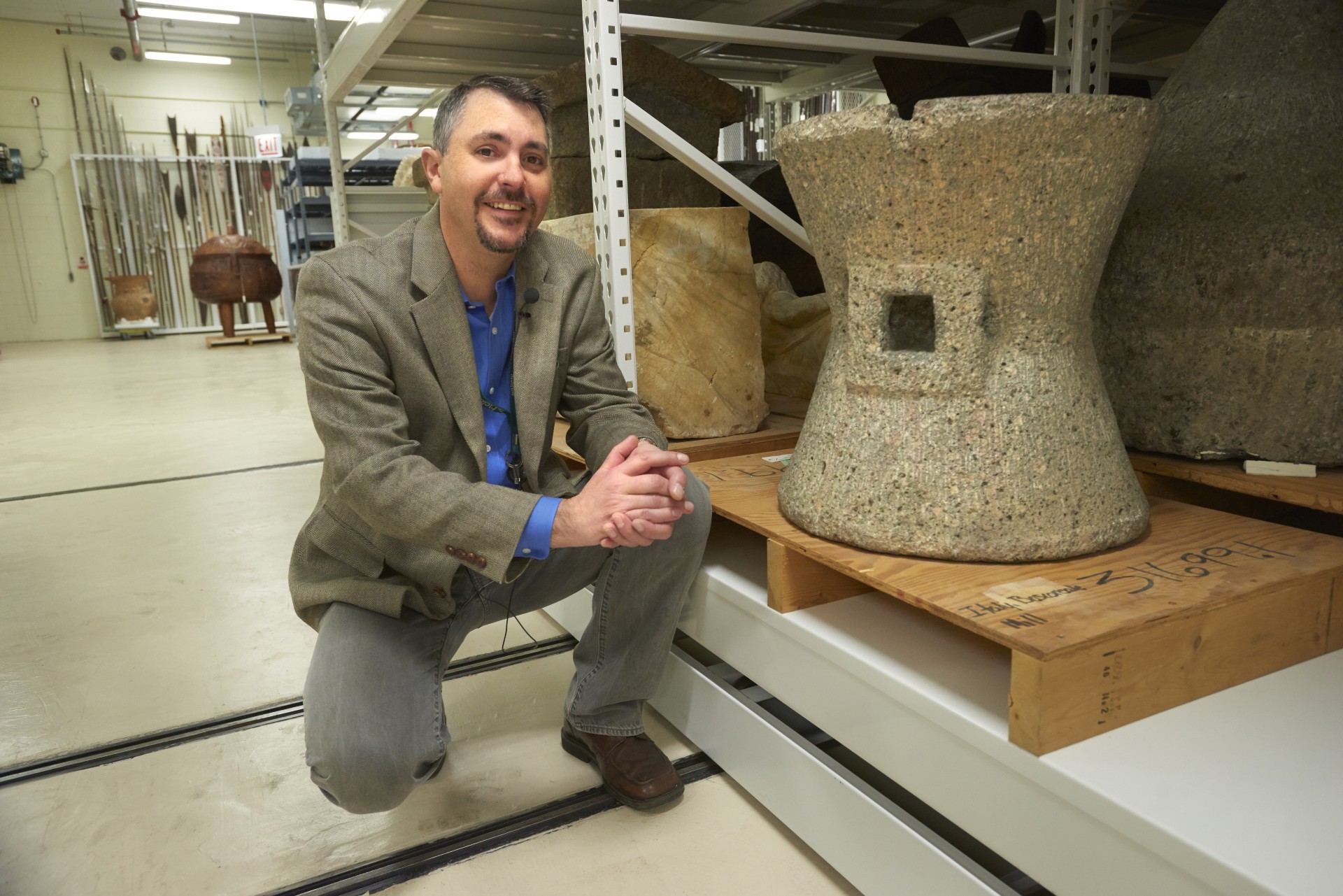
William (Bill) Parkinson is an archaeologist who specializes in European and Eastern Mediterranean Prehistory. His anthropological and archaeological research explores the social dynamics of early village societies and the emergence of early states. He has over 30 years experience conducting archaeological field work and developing museum exhibitions for the Field Museum. He and Attila Gyucha co-direct the Körös Regional Archaeological Project, an international, multi-disciplinary research project aimed at understanding the social changes that occurred on the Great Hungarian Plain throughout the Holocene. Bill also co-directs the Southern Mani Archaeological Project with Chelsea Gardner and Rebecca Seifried, an archaeological project that explores the social changes that occurred on the southern Greek mainland. In addition to his research in Europe, Bill also runs an archaeological project in Illinois.
The Mani peninsula of the southern Greek mainland is known for its quenched, rugged, rocky terrain. Separated from the rest of the Greek mainland by the towering Taigetos mountain range, the Mani is its own place; unlike the rest of mainland Greece but also not like the islands. The Mani boasts some of the earliest evidence of human occupation in Europe, dating back several hundred thousand years, and in historical times the region was notorious for remaining staunchly independent of colonial domination. Despite its amazing potential to shed light on the past, the archaeology of the region has remained vastly under-studied. In this presentation, Bill Parkinson discusses the results of his team’s collaborative work at Alepotrypa Cave, a massive cave complex that was used as a burial ground for thousands of years by early agricultural villagers. He also will discuss a new project he is co-directing with his colleagues, Chelsea Gardner and Becky Seifried, which focuses on southern Mani.
The modern world is mostly urban; 56% of the world’s 4.4 billion inhabitants live in cities. By 2050, when the world will have over 8 billion people, nearly 7 of 10 people will live in cities. This is unprecedented for our species, which evolved to live in small, mobile communities. But the evolution of cities was not a straightforward path. In this presentation, Bill Parkinson discusses the evolution of villages in central and southeastern Europe. Drawing on decades of collaborative archaeological work with his colleague Attila Gyucha at prehistoric sites in the Carpathian Basin, Bill will discuss the different trajectories that societies took towards living together in large, nucleated towns and some of the world’s earliest proto-urban centers.
The modern world is plagued with unprecedented levels of social, economic, and political inequalities. But these inequities did not happen overnight; in places like southeastern Europe they emerged over the course of thousands of years as the small egalitarian farming villages of the Neolithic gave way to some of the earliest hierarchical kingdoms in the Iron Age. This is the story that was told in the First Kings of Europe exhibition, an ambitious international collaboration between twenty-six museums in eleven countries in southeastern Europe. In this presentation, Bill Parkinson gives an overview of his archaeological research into the emergence of social hierarchy in the region, as well as an overview of the exhibition he co-curated with his long-time collaborator, Attila Gyucha.