Affiliation: UCLA
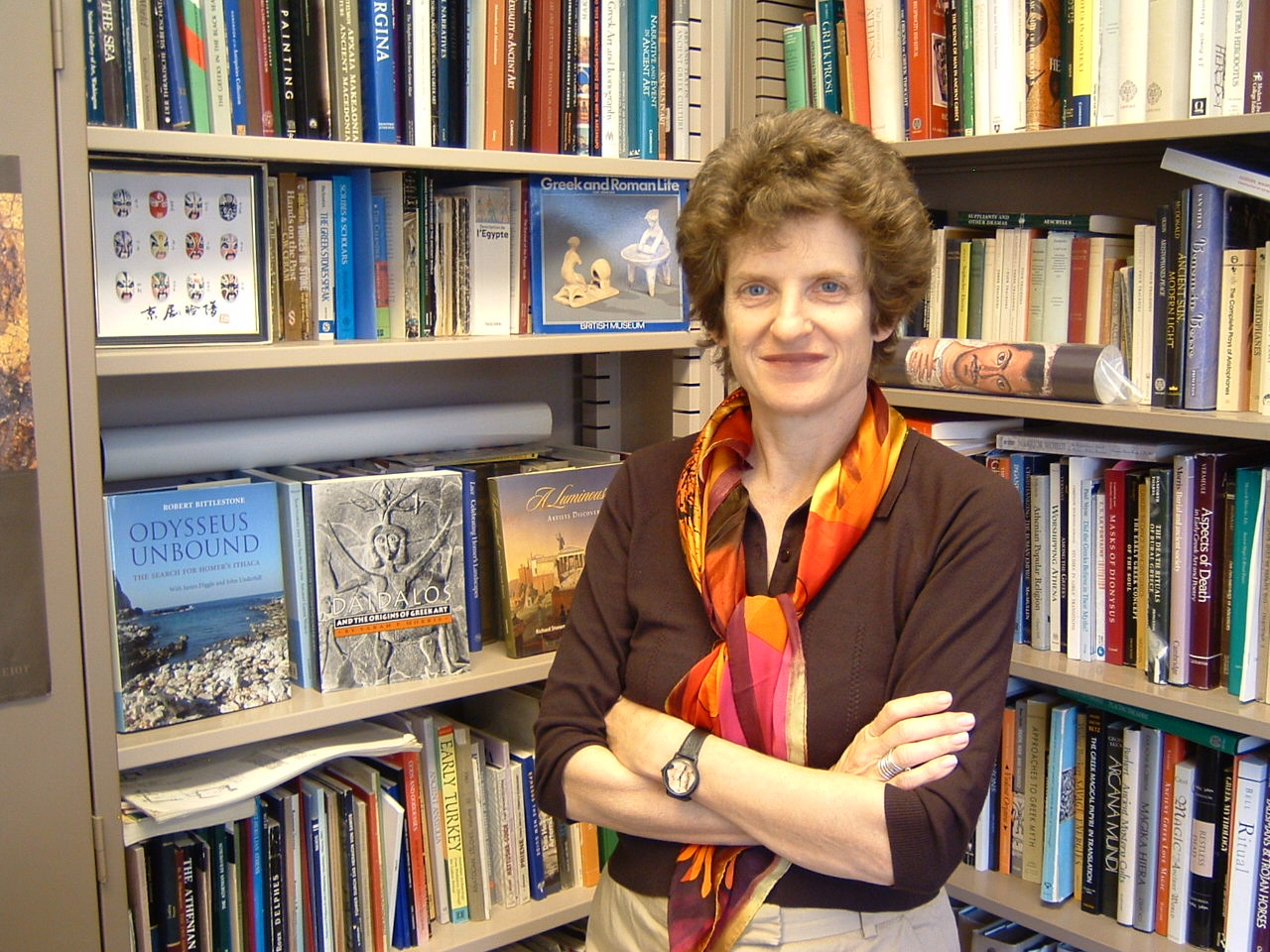
Sarah Morris is a classicist and archaeologist in the Department of Classics and the Cotsen Institute of Archaeology at UCLA. A graduate of the University of North Carolina at Chapel Hill, she received her doctorate in Classics at Harvard University, and taught at Yale University before joining the UCLA faculty in 1989, where she served as Department Chair at UCLA from 1997-2000 and chair of the Interdepartmental Ph.D. program in Archaeology at the Cotsen Institute of Archaeology from 2001-2004. She was named Steinmetz Professor of Classical Archaeology and Material Culture at UCLA in 2001.
Her training and research involve the interaction of Greece with its Eastern neighbors, in art, literature, religion and culture. Her chief book on the subject, Daidalos and the Origins of Greek Art (Princeton, 1992) won the James Wiseman Book Award from the Archaeological Institute of America for 1993. She has also edited (with Jane Carter) a volume of essays, The Ages of Homer (Texas, 1995), on the archaeological, literary, and artistic background and responses to Greek epic poetry. A practicing field archaeologist, she has worked in Israel, Turkey, Greece, and Albania, and has recently completed a field project at Methone in northern Greece.
Her teaching and research interests include early Greek literature (Homer, Hesiod and Herodotus), Greek religion, prehistoric and early Greek archaeology, ceramics, Greek architecture and landscape studies, and Near Eastern influence on Greek art and culture.
The poetry of Homer imagines a multitude of Greek “kingdoms” that sent ships and men to fight at Troy, listed in a famous Catalogue in Book Two of the Iliad. Many of the cities named have Bronze Age remains, verified through archaeology, while other places may be mere memories or fantasies of the past. North of Thessaly, both names and tales peter out, but recent archaeological field work and historical research seek to expand the Mycenaean world into the north Aegean, in mythology and reality. Excavations conducted at Methone in Pieria since 2003 have revealed the long and rich local histories of human activity in northern Greece, from the Bronze Age through Early Iron Age Greek colonization and the growth of Macedon.
Greek mythology and history abound in tales of kings, their families, and deeds, from Homeric epic through local genealogies of Greek city founders and dynasties. As long known, actual historical evidence for hereditary monarchy (king lists and titles, reigns and events) is conspicuously absent from the written record since the Bronze Age, and in Aegean through Classical Greek art, unlike the record of its Eastern neighbors. Outside of Macedon, Greek city states conducted evolving experiments in self-governance, shared power, and briefly tolerated or terminated tyrannies as exceptions. A survey of Mycenaean evidence in art and text through images of royalty in Greek art will aim at understanding the long-term pattern of missing rulers.
One hundred years ago, scholars identified proto-Greek personal names and places in Hittite texts of the Late Bronze Age that anticipated those in Homeric epic. Over the past century, scholars have debated linguistic and historical connections between these Anatolian texts of the second millennium BCE and early Greek epic poetry, especially the identification of Hittite Aḫḫiya(wa) with Homeric “Achaeans.” Yet events recorded in Hittite documents resemble more closely interactions in western Anatolia in the first millennium BCE, as narrated by the Greek historian Herodotus, than they illuminate or foreshadow heroic events in epic verse. Meanwhile, early East Greek art, archaeology, and poetry preserve other tales of Anatolian heroes and cities behind the Iliad, and attest to the survival of Bronze Age ritual practices in western Anatolia.