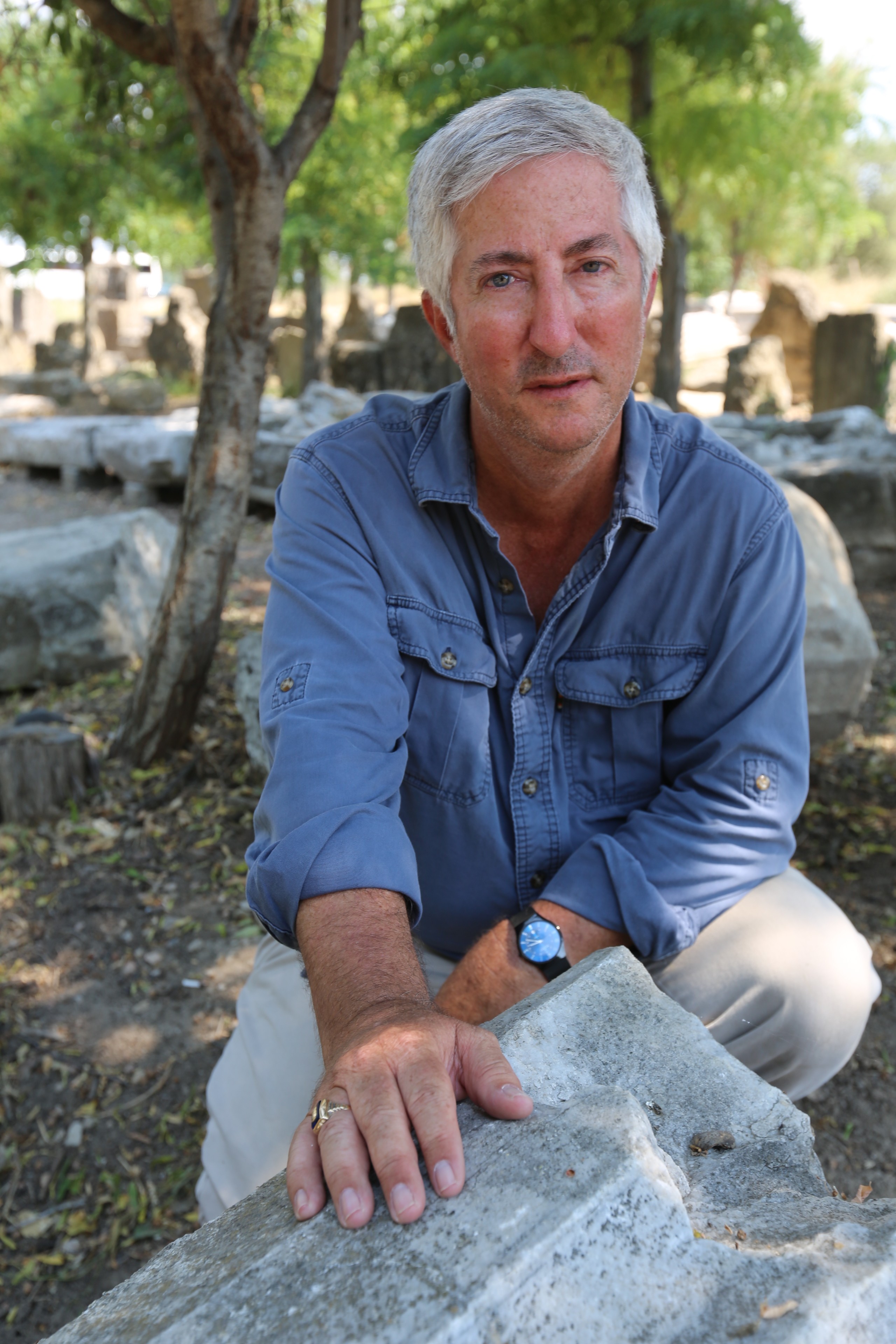
Eric Cline is Professor of Classics and Anthropology at the George Washington University, Director of the GWU Capitol Archaeological Institute, and former Chair of the Department of Classical and Near Eastern Languages and Civilizations Department at GWU. A two-time Fulbright scholar, National Geographic Explorer, NEH Public Scholar, Getty Scholar, and member of the Explorers Club, with degrees from Dartmouth, Yale, and the University of Pennsylvania, he is an active field archaeologist with more than 30 seasons of excavation and survey experience in Israel, Egypt, Jordan, Cyprus, Greece, Crete, and the United States, including ten seasons at the site of Megiddo (biblical Armageddon) in Israel and another ten seasons at Tel Kabri, also in Israel, where he is currently Co-Director. He is the author, co-author, or co-editor of more than 20 books to date, including 1177 BC: The Year Civilization Collapsed and After 1177 BC: The Survival of Civilizations (both published by Princeton University Press). Two have been nominated for the Pulitzer Prize and seven have won awards, including the Biblical Archaeology Society’s “Best Popular Book on Archaeology” award (four times: in 2001, 2009, 2011, and 2025); the American Society of Overseas Research (ASOR)’s “Nancy Lapp Award for Best Popular Book” (2014 and 2018); and the American Schools of Oriental Research’s “G. Ernest Wright Award for Best Scholarly Publication” (2019). Many have been translated, into 23 languages, including French, German, Italian, Dutch, Spanish, Portuguese, Greek, Turkish, Korean, Chinese (both Simplified and Complex), Japanese, Russian, Czech, Serbian, Bulgarian, Ukrainian, and Hungarian. He has also authored or co-authored more than 130 academic articles and 40 book reviews, which have been published in peer-reviewed journals, festschriften, and conference volumes. A popular lecturer who has frequently appeared in television documentaries and on YouTube, he has also won national and local awards for both his research and his teaching, including the AIA’s Undergraduate Teaching Award (2005). Dr. Cline has previously been an AIA Kershaw Lecturer (2000-2001); Kantor Lecturer (2006-2007); Matson and La Follette Lecturer (2008-2009); Norton Lecturer (2018-19); McDonald Lecturer (2019-20); and, most recently, once again a Kershaw Lecturer (2024-25).
See Eric Cline’s work in the American Journal of Archaeology:

Sabina Cveček is a Marie Skłodowska-Curie Global Postdoctoral Fellow at the Field Museum in Chicago and the Austrian Academy of Sciences in Vienna. Her research concerns contextualizing prehistoric households, kinship, and social organization in the eastern Mediterranean from socio-cultural anthropological perspectives. She holds PhD in socio-cultural anthropology from the University of Vienna (2021). Previously, she was a visiting researcher at the Max Planck Institute for Social Anthropology in Halle/Saale and an IFK Junior Fellow at the International Research Centre for Cultural Studies in Vienna. Cveček is an elected Fellow of the Royal Anthropological Institute, a co-chair of the Archaeology and Gender in Europe network of the European Association of Archaeologists, and the incoming At Large Director at the Coalition for Archaeological Synthesis (CfAS). Her recent publications include Enthrone, Dethrone, Rethrone? Multiple Lives of Matrilineal Kinship in the Aegean Prehistory (Archaeological Dialogues), Why Kinship Still Needs Anthropologists in the 21st Century (Anthropology Today), and her book, Çukuriçi Höyük 4: Household Economics in the Early Bronze Age Aegean, was published in 2022 by the Austrian Academy of Sciences Press.

Dr. Erin Darby is an associate professor of Religious Studies at the University of Tennessee and the co-director of the ‘Ayn Gharandal Archaeological Project in southern Jordan. She is an expert in Levantine archaeology, the Hebrew Bible, and ancient Near Eastern history, and specializes in ancient religion and iconography. Her first book, Interpreting Judean Pillar Figurines: Gender and Empire in Judean Apotropaic Ritual (Mohr Siebeck 2014), and her co-authored volume, Iron Age Terracotta Figurines from the Southern Levant in Context (Brill, 2021) draw upon her knowledge of Late Bronze through Persian period figurines in Israel, Jordan, Egypt, Syria, and Mesopotamia. Her current monograph, Religion at the Boundaries, examines the cultic furnishings and votive deposits from a series of late Iron Age shrines connected along trade networks in southern Israel and Jordan. She is particularly interested in the material cultural evidence for institutional patronage, craft specialization, economic development, and interreligious exchange.
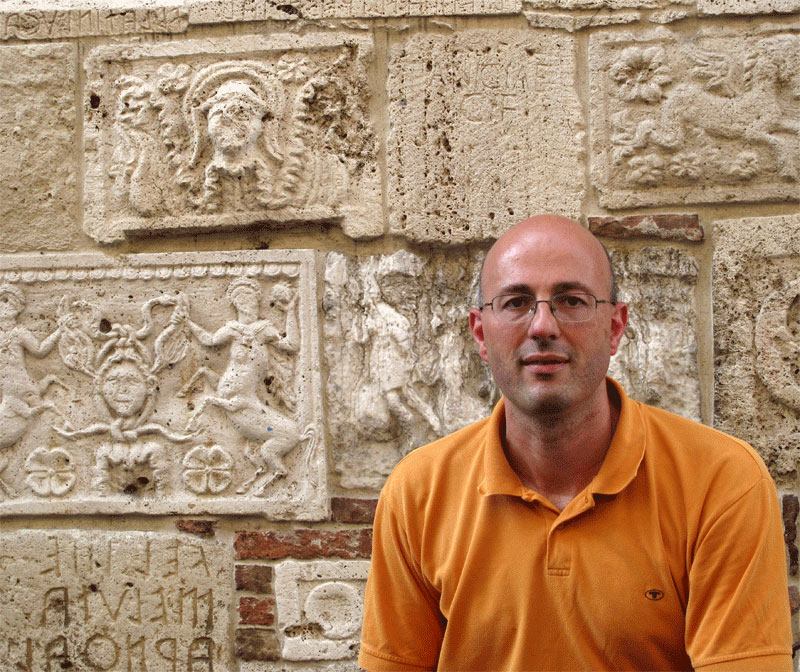
Francesco de Angelis works on Roman, Etruscan, and Greek art and architecture, with a particular focus on the interaction between viewers, spaces, and social practices; cultural memory; bodies and embodiment in ancient art; and the visual tradition of mythology as expression of intercultural relationships, both synchronically and diachronically.
His research on the diffusion, appropriation, and reconfiguration of state imagery in the Roman world analyzes the role of viewing contexts and viewing circumstances in the reception of official monuments both within and beyond the public realm, and puts particular emphasis on the notion of ornament as well as the interplay of attention and distraction. In his work on the arts of the Greeks in Imperial times, de Angelis is especially interested in how the system of cultural mnemotechnics underlying the visual culture of the high Empire both expressed and shaped cultural identities. The function of monuments as lieux de mémoire for travelers and intellectuals like Pausanias and Plutarch, the status of copies in Roman imperial culture, the manifestation of artistic identity through artists’ signatures and in ancient discourses on art, are among the themes he has been addressing in this context. A further project, on ancient antiquarianism, examines the place of monuments in Greek and Roman historical thinking, from Herodotus and Theopompus to Varro and Dionysius of Halicarnassus.
The human (and animal) body as a key figural component of Etruscan furnishings and tools—tables, incense-burners, paterae, strigils, etc.—is the focus of his research analyzing Etruscan notions of the body through the study of corporeal representation and artifactual embodiment, with particular attention to the relationship to Greek physical ideals. In his work on Etruscan funerary imagery, de Angelis has examined the way in which the inhabitants of the cities of northern Etruria interpreted and re-fashioned the Greek mythological repertoire when using it to decorate their cinerary urns and sarcophagi.
As the co-founder and co-director—with historian Marco Maiuro—of the Advanced Program of Ancient History and Art (APAHA), Francesco de Angelis has been leading the excavation at the UNESCO World Heritage site of Hadrian’s Villa in Tivoli since 2014. This fieldwork project places emphasis on the everyday dimension of the villa as well as its long-term history. By approaching an exceptional site with “ordinary” archaeological methods, the project provides a perspective never properly developed in traditional scholarship on Hadrian’s Villa. The excavation has already been yielding new insights into the architectural planning process of the villa’s non-imperial quarters (including impressive parallels to contemporary developments in Ostia), the designing of mosaics and paintings, the religious life at the site, and the dynamics of its post-Hadrianic history, from the Antonines to late Antiquity and down to the Middle Ages and the early Modern period.
Francesco de Angelis has worked at the German Archaeological Institute in Rome and at the Scuola Normale Superiore in Pisa. He has organized conferences, workshops, and exhibitions on several themes, from Philostratus’ ekphraseis to Columbia’s own collection of archaeological artifacts, to—most recently—functions and connotations of the kantharos. He is the recipient of numerous fellowships and awards (Getty Research Institute; Humboldt Foundation; Columbia’s Lenfest Distinguished Faculty Award). In 2015 he was nominated the President of the U.S. section of the National Institute of Etruscan and Italic Studies. Since 2016 he chairs the Classical Studies Graduate Program.
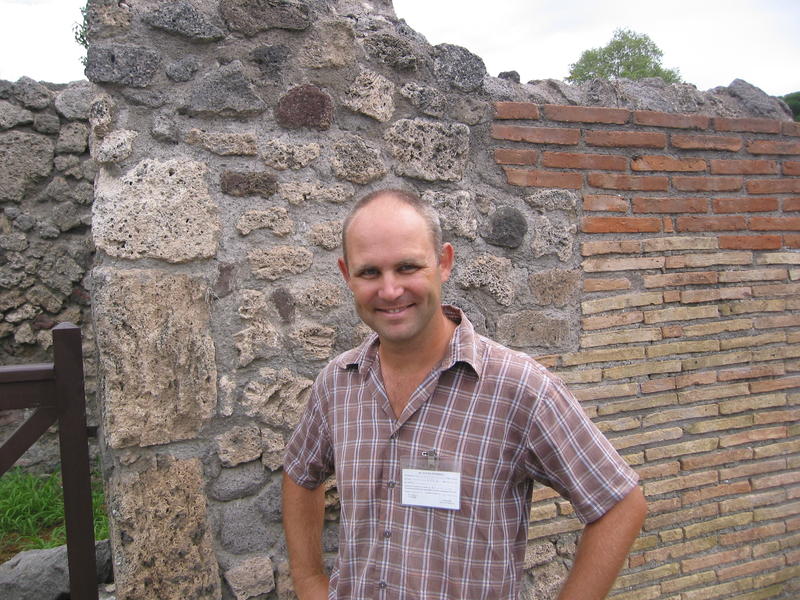
Steven Ellis is with the Department of Classics at the University of Cincinnati, and holds his Ph.D. from the University of Sydney. His areas of specialization include Roman urbanism and social history, ancient architecture, Greek and Roman art and archaeology, and the excavation of complex urban sites; his is the project director for the Pompeii Archaeological Research Project at Porta Stabia, and the East Isthmia Archaeological Project. Professor Ellis has published widely, and has several recent forthcoming works on aspects of his work in Pompeii.
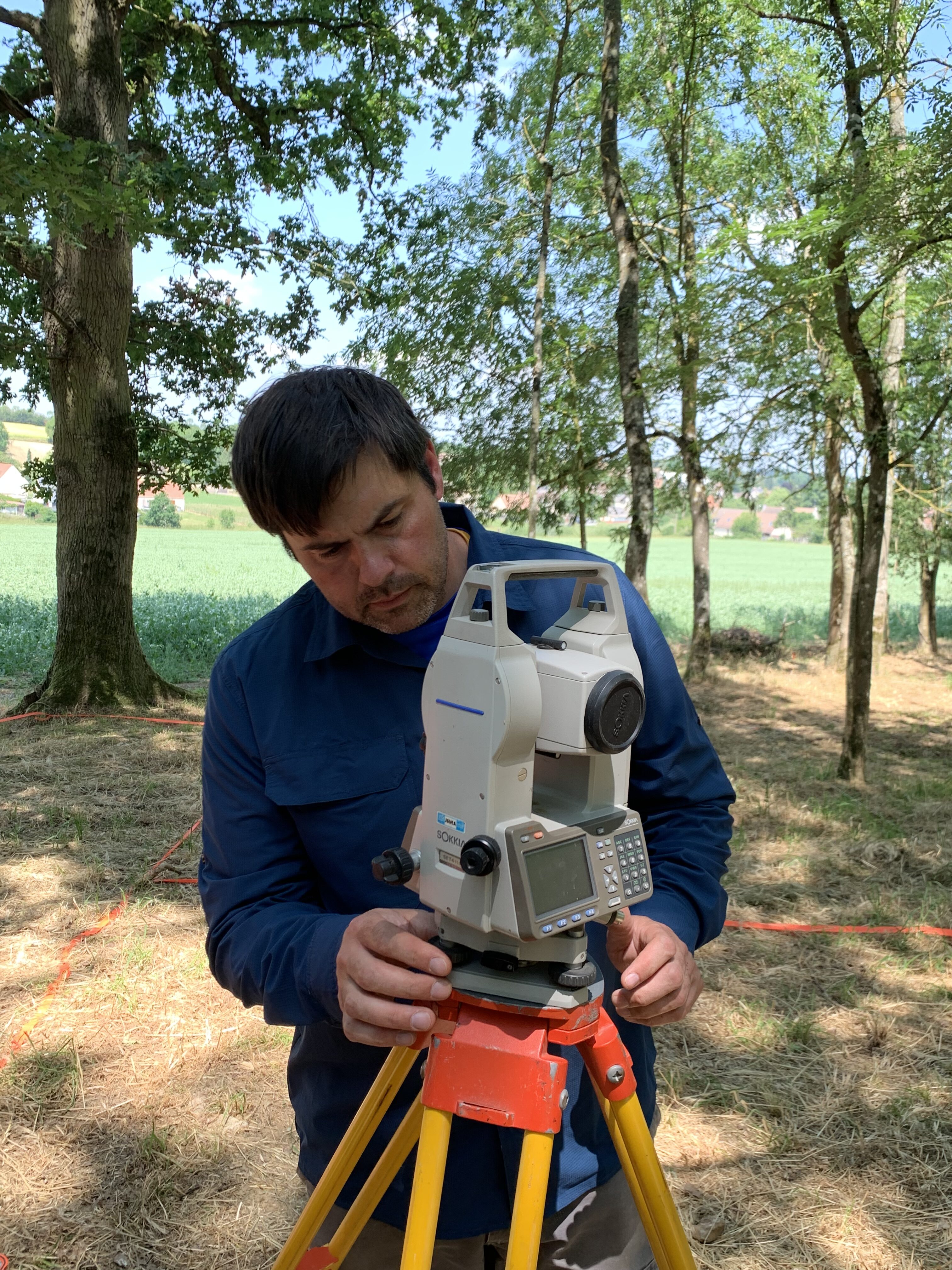
Adam Fracchia is the City Archaeologist with the Metropolitan Nashville and Davidson County Government and founded the Nashville Public Archaeology Program. His research focuses on urbanization, labor, and industrialization as well as heritage management and public archaeology. Prior to joining the staff in 2022, Adam led a community archaeology program in Baltimore and collaborated with several universities, the National Park Service, the Department of Defense, and the Maryland State Highway Administration. He is coauthor of Below Baltimore: An Archaeology of Charm City (2023).
Alison Futrell is Professor of History at the University of Arizona. Her research is guided by her interest in the performance and imagery of power in the Roman Empire, with particular focus on spectacle and gender. She is also fascinated by representations of the ancient Mediterranean in modern popular culture. She has appeared in a range of public-facing media, including, most recently, for BBC History Extra, National Geographic, and as a featured expert in ‘Colosseum’, an eight-part series on the History Channel. She is the author of Blood in the Arena (1997) and Roman Games (2006) and co-editor of the Oxford Handbook of Sport and Spectacle in the Ancient World (2021) and co-creator of the University of Arizona Enhanced Experience for Age of Empires IV.

Dr. Amy Gansell is Professor of Art History in the Department of Art & Design at St. John’s University, where she serves as the Assistant Department Chair and Coordinator for the Women’s, Gender, and Sexuality Studies Interdisciplinary Minor. She received her PhD in the History of Art and Architecture from Harvard University in 2008. From 2008 to 2010, Dr. Gansell held a full-time position with the US Department of State as the Associate Coordinator for Afghan and Iraqi Cultural Heritage. In this capacity, she worked on diplomatic projects to restore and build professional capacity at the Afghan National Museum, the National Museum of Iraq, and the site of Babylon. Dr. Gansell returned to academic life in 2010 as a postdoctoral fellow at Emory University’s Bill and Carol Fox Center for Humanistic Inquiry, after which she taught art history to art and design students at Pratt Institute and the State University of New York’s Fashion Institute of Technology (FIT).
Dr. Gansell’s current research focuses on the architecture, art, and artifacts that help to tell the stories of ancient Mesopotamia’s Neo-Assyrian queens (c. 865–612 BCE). Her monograph on this subject is forthcoming with Oxford University Press. Dr. Gansell has co-edited CyberResearch on the Ancient Near East and Neighboring Regions (Brill, 2018) and Testing the Canon of Ancient Near Eastern Art and Archaeology (Oxford University Press, 2020), and her scholarly essays have appeared in prestigious international journals including the American Journal of Archaeology, Cambridge Archaeological Journal, and the Journal of Archaeological Science. Dr. Gansell’s research and publications have been supported through two National Endowment for the Humanities (NEH) grants as well as a grant from The American Academic Research Institute in Iraq (TAARI).
Stephen Houston is a leading scholar of Mesoamerica, particularly on Classic Maya kingship, writing systems, and urbanism. He has led major archaeological excavations at sites including Piedras Negras and El Zotz in Guatemala, contributing to a greater understanding of Maya court life and ritual. Houston is also a notable expert in the decipherment and interpretation of ancient scripts. His extensive publication record spans topics from epigraphy and architecture to the history of communication and the disappearance of writing systems.
Derek Kennet is the Howard E. Hallengren Professor in Arabian Peninsula and Gulf States Archaeology in Near Eastern Languages and Civilizations at the Institute for the Study of Ancient Cultures. His research areas include the Arabian peninsula, the rise of Islam, economic responses to arid environments, and the interactions between the Arabian peninsula and adjacent regions. He was formerly the resident archaeologist at the National Museum of Ras al-Khaimah in the UAE and spent 25 years at Durham University in the UK before moving to Chicago in 2024. He completed his undergraduate studies at Institute of Archaeology in London and his PhD is from the University of London’s School of Oriental and African Studies (SOAS). He has coauthored several books, the most recent of which— Southeast Arabia at the dawn of the second millennium: the Bronze Age communal graves of Qarn al-Harf, Ras al-Khaimah (UAE)— was published in 2025.