
Filters

Changing any of the form inputs will cause the list of events to refresh with the filtered results.

  • Mediterranean Marketplaces: Connecting the Ancient World Exhibition

    Harvard Museum of the Ancient Near East 6 Divinity Avenue, Cambridge, MA, United States

    Much like today, ancient “consumers” were connected to distant markets. Both basic and precious goods from faraway lands “shipped” to royal palaces, elite estates—sometimes even rural households—and technological advances in craftsmanship and commerce transcended boundaries of language, religion, or culture to spread rapidly. Mediterranean Marketplaces explores how the movement of goods, peoples, and ideas around […]
  • Muchos Méxicos: Crossroads of the Americas Exhibition

    Peabody Museum of Archaeology and Ethnology 11 Divinity Avenue, Cambridge, MA, United States

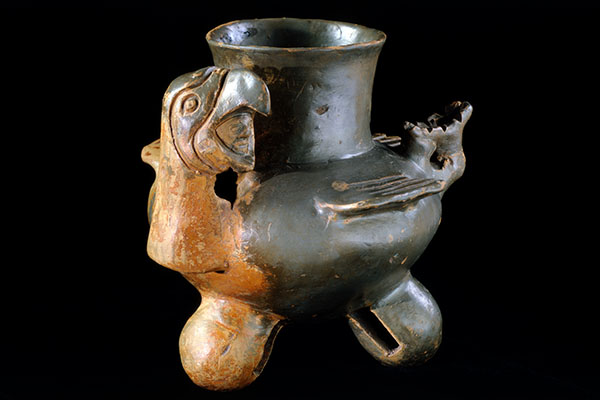
    Muchos Méxicos explores Mexico’s rich history as a site of human innovation, creativity and cultural diversity. Featuring Mexican objects from the Peabody Museum collections, this bilingual exhibit tells the story of Mexico as a multicultural and geographic crossroads—one where the exchange of resources, products, and ideas among Indigenous peoples throughout the Americas before the Spanish […]

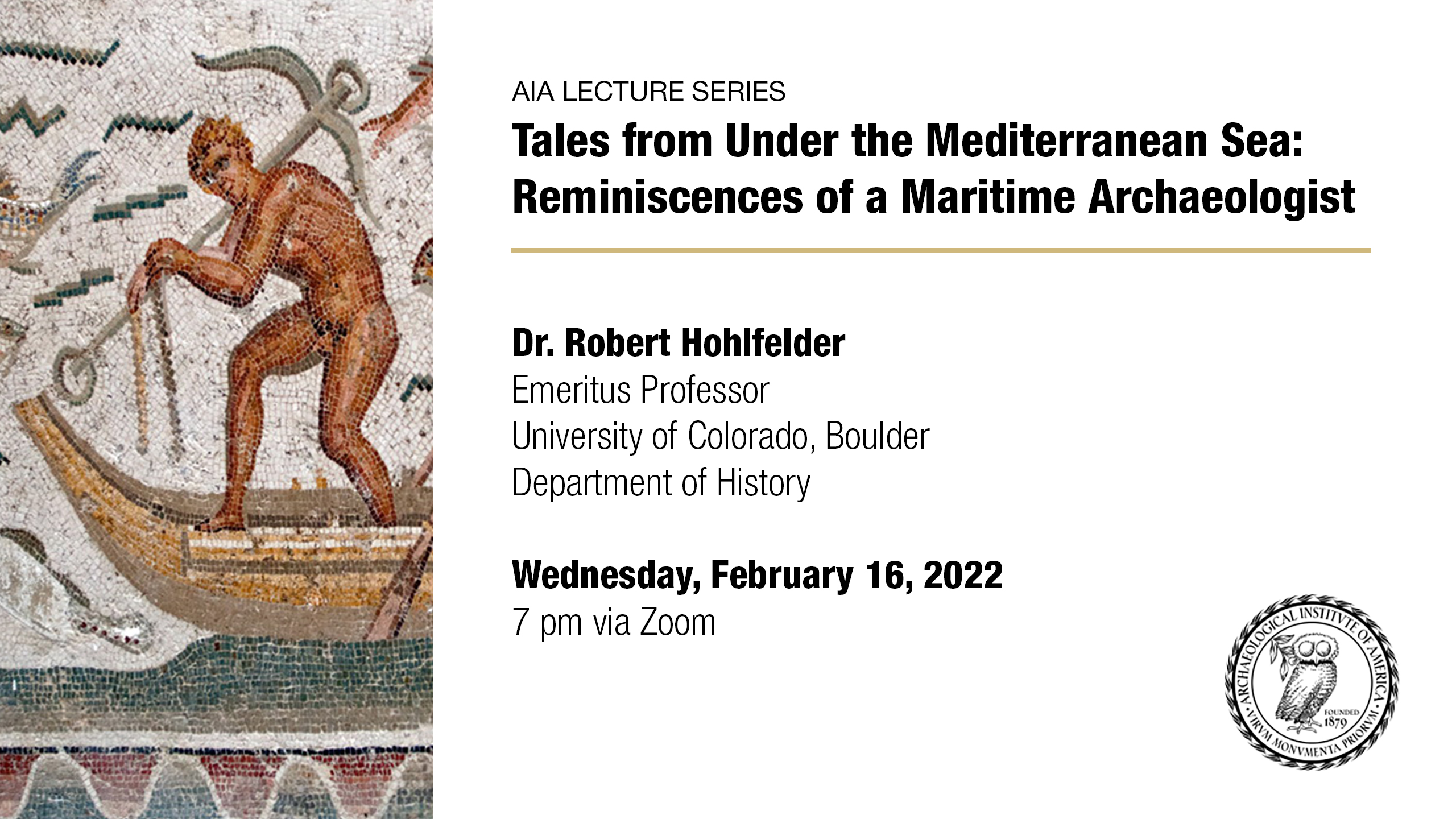
  • Tales from Under the Mediterranean Sea: Reminiscences of a Maritime Archaeologist

    Hale Science Building, Rm. 270 1350 Pleasant Street, Boulder, CO, United States

    The lecture presented by Dr. Robert Hohlfelder (Emeritus Professor, CU Boulder), will cover some of the most amazing discoveries of his long career including: A Treasure Trove of 4th Century CE Glass Panels Found in the Sea, Pixie Dust and Roman Imperial Maritime Infrastructure, The Amazing Levitating Roman Amphoras, Two Harrowing Episodes 1,000 feet Below […]

  • Archaeology Abridged with Dr. Kate Liszka “Forts, Prisons, or Rudimentary Vaults? The Three so-called “Fortresses” of Pharaoh at Wadi el-Hudi and their Connection to Amethyst Mining”

    Acquiring amethyst in Ancient Egypt was a tricky business.  But the cut raw amethyst, the amethyst mines, and the people in the desert all needed to be guarded.  As part of the mining procurement process, the Egyptians created massive stone settlements and networks of guard posts in the desert.  The settlements have often been compared […]

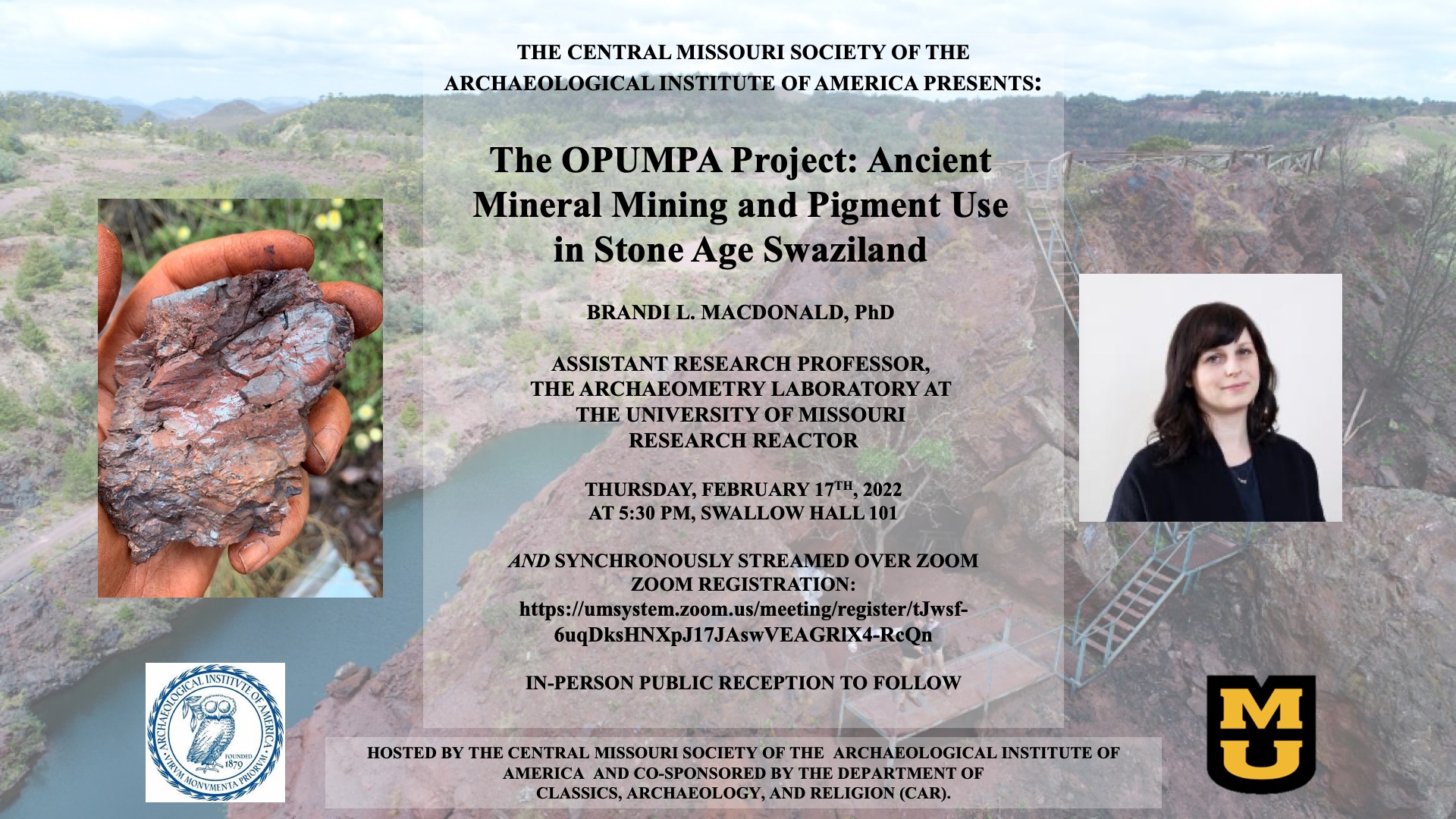
  • The OPUMPA Project: Ancient Mineral Mining and Pigment Use in Stone Age Swaziland

    University of Missouri-Columbia 112 Swallow Hall, Columbia, MO

    “The OPUMPA Project: Ancient Mineral Mining and Pigment Use in Stone Age Swaziland,” presented by Dr. Brandi L. MacDonald (Assistant Research Professor, The Archaeometry Laboratory at the University of Missouri Research Reactor). This lecture will be held in person in Swallow Hall 101 at the University of Missouri-Columbia, but we are also providing a zoom […]

  • Continuity and change in Etruscan religion under Roman hegemony

    CA, United States

    Dr. Kevin Dicus (University of Oregon) Roman imperial ambitions began with the occupation of Italy. The Etruscans, once the dominant civilization, experienced great cultural and political upheavals. Foreign traditions, goods, and belief systems entered their territories, challenging and changing their ways of being. Scholars have referred to the process as “Romanization”: conquered peoples adopt Roman […]

  • Games of Chance and Fate: Patolli Game Boards from the Ancient Maya site of Gallon Jug, Belize

    Dr. Claire Novotny (Kenyon College) Graffiti provides a unique and informal perspective on the lived experiences and daily cultural practices of ancient people. In the ancient Maya culture, graffiti of ritual processions, human figures, and game boards were incised into plastered walls, benches, and floors in buildings that formed civic ceremonial centers. Game boards, called […]

  • Caveat Lector: The historical record and the archaeology of provincial collapse on Rome’s northern frontiers during the third century CE

    TBD Trinity University, San Antonio, United States

    The third century CE is arguably the most poorly understood period of the Roman Empire. Nonetheless, it is a critical time in World History, as it ushered in the transition of the Classical World to Late Antiquity and saw the end of the Roman system as defined by Augustus. One of the most consequential changes […]

  • Anna Agbe-Davies, “The Mis-Education of Pauli Murray”

    Tuesday, February 22, 2022 7:30 p.m. ET Join Zoom Meeting https://davidson.zoom.us/j/99143304841 Meeting ID: 991 4330 4841 Anna Agbe-Davies, “The Mis-Education of Pauli Murray” About the lecture: This presentation considers education, womanhood, and signs as refracted through the life of human rights pioneer Pauli Murray, prompted by the archaeological investigation of her childhood home in Durham, […]