

Filters

Changing any of the form inputs will cause the list of events to refresh with the filtered results.

  • Cultural Resources at the NC Office of State Archaeology

    HIghsmith Union, UNC Asheville One Carmichael Heights UNCA, Asheville, NC, United States

    As Assistant State Archaeologist for the western region, Dr. Dylan Clark will discuss what the North Carolina Office of State Archaeology does and how it contributes to identifying, studying, protecting, […]

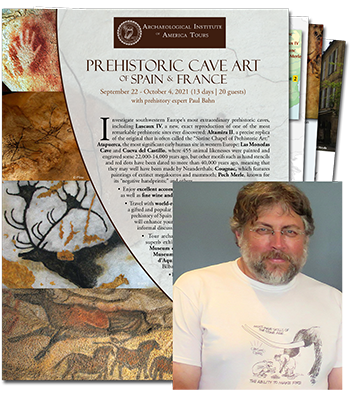
  • Prehistoric Cave Art of Spain & France

    Investigate southwestern Europe’s most extraordinary prehistoric caves, including Lascaux IV, a new, exact reproduction of one of the most remarkable prehistoric sites ever discovered; Altamira II, a precise replica of […]

  • Landscapes of Conflict

    Fortification and Institutionalized Inequality in Mensabak, Chiapas, Mexico In this talk, Christopher Hernandez of Loyola University's Department of Anthropology argues that the ancient inhabitants of the Mensabak region of Chiapas, […]

  • Finding the elusive household in the Bronze Age Aegean

    The household has been a topic of considerable anthropological interest since membership in a residential unit is often held as one of the prerequisites for belonging to the wider political, […]

  • “Man Does not live by bread alone” (Deut 8:3): Daily Life in Biblical Times

    Dr. Oded Borowski Emory University For a very long time, archaeologists were busily investigating major biblical sites trying to recover remains related to figures mentioned in biblical stories. Related to this, they were also establishing chronologies through the study of pottery. More recently, attention was diverted to the study of daily life of the average […]

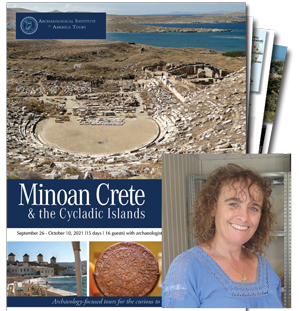
  • Minoan Crete & the Cycladic Isles

    Step back in time to explore the island of Crete, center of the Minoan civilization during the Bronze Age, as well as the nearby Cycladic Islands of Santorini, Mykonos, and […]

  • Egyptology and Race

    Rye Free Reading Room 1061 Boston Post Road, Rye, NY, United States

    Egyptologists make decisions about how to define the discipline. They make decisions involving time, space, and values. These actions are perfectly normal in that there is a limit as to how much data one mind can absorb. One also has the opportunity to stand back and view these decisions in aggregate. This especially applies to […]

  • The Roman Villa Project: Archaeology, Paleobotany, and Sustainable Agriculture in Italy’s Sabine Hills

    The Niagara Peninsula Society of the Archaeological Institute of America (AIA) Public Lecture Series is excited to welcome Mark Usher, University of Vermont, as our first lecturer of the season. Dr Usher will speak about, "The Roman Villa Project: Archaeology, Paleobotany, and Sustainable Agriculture in Italy’s Sabine Hills." See the poster below. The lecture will […]