Affiliation: University of Missouri, St. Louis
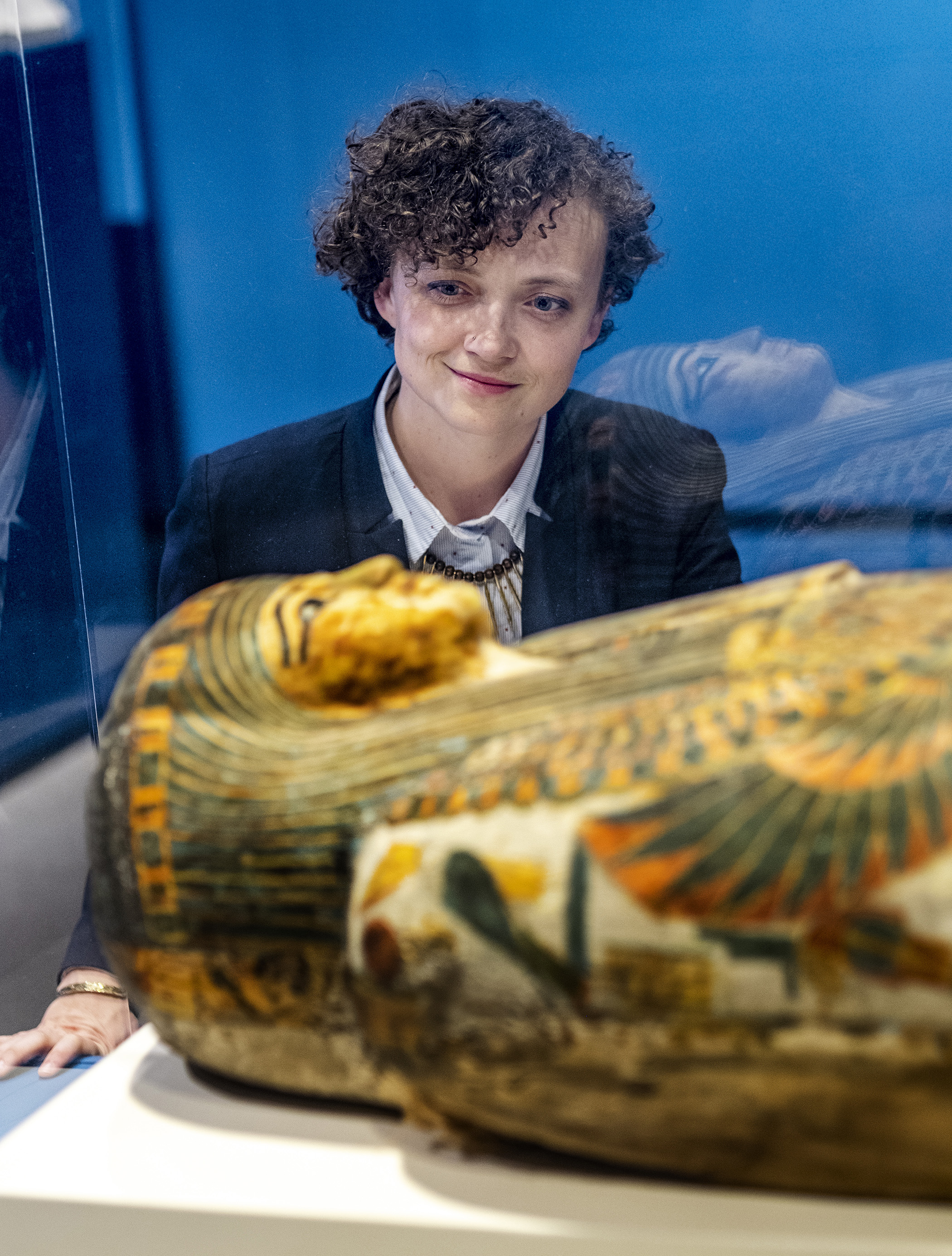
Dr. Anne Austin is an Associate Professor of History at the University of Missouri St. Louis (UMSL). She received her B.A. in Anthropology from Harvard University and earned her M.A. and Ph.D. in the Archaeology program at UCLA. She joined UMSL in 2017 after completing a three-year postdoctoral fellowship in the History Department at Stanford University. Her research combines the fields of osteology and Egyptology in order to document medicine and disease in the past. In her book, Healthmaking in Ancient Egypt, Anne uses data from ancient Egyptian human remains and daily life texts to reconstruct ancient Egyptian health networks and identify how ancient Egyptians improved their health and responded to illness. While working at Deir el-Medina, Anne discovered the mummified remains of a woman with 30 different tattoos. Since then, she and her team have identified several other tattooed women, rewriting the history of tattooing in ancient Egypt. Anne’s next book will explore the practice of tattooing in ancient Egypt and its potential connections to gender, religion, and medicine.
Much of our modern health advice comes and goes based on just a few decades of information and trends that may only last a couple of years. This talk takes a different approach: what could we learn about living healthier lives today from evidence that is thousands of years old?
In this talk, we’ll answer this question through a deep dive into evidence from Deir el-Medina, a New Kingdom village in ancient Egypt for the skilled artisans who cut and decorated the royal tombs. By combining evidence from human remains with the site’s rich collection of texts, we can reconstruct how Deir el-Medina’s residents experienced health, illness, and care more than 3,000 years ago.
I draw from over a decade of my research at the site studying human remains to show how the people of Deir el-Medina were healthmakers—they used their social, economic, and medical knowledge in combination to improve the health of themselves and their community. These factors—what modern public health researchers call the Social Determinants of Health—help explain why some people stayed healthier than others, both in the past and today.
By looking beyond a purely biomedical understanding of medicine, this talk reveals how community, environment, and daily life shaped health in ancient Egypt. In doing so, it offers a new way of understanding ancient Egyptian society—and shows that some of the most important lessons about health may come from the deep past.
This talk is based on her book, Healthmaking in Ancient Egypt (Brill, 2024). For more information about current work at Deir el-Medina, see https://www.ifao.egnet.net/archeologie/deir-el-medina/.
For more than a century, archaeologists knew that some ancient Egyptians and Nubians had tattoos—but only a few tattooed people had been identified across Egypt and Nubia’s vast ancient history. Egyptian texts are virtually silent on the practice and depictions of tattoos are often ambiguous.
Over the past decade, however, new technology and growing interest have dramatically changed our evidence for and understanding of tattooing. This includes my work with the Institut Français d’Archéologie Orientale (IFAO), where we made an incredible discovery—an extensively tattooed woman from the necropolis at Deir el-Medina, the community of the workmen who cut and decorated the New Kingdom’s royal tombs. With over 30 tattoos, this woman completely redefined what we knew about tattooing in ancient Egypt.
Since then, my colleagues and I have identified several other tattooed people at the site and new evidence for the practice of tattooing in ancient Nubia. Additional tattoo discoveries and collaborations with tattoo artists have also filled in large gaps on the practice. Today, we have evidence for more than 50 tattooed people from the Nile Valley.
This lecture will share the stories of these tattooed people and the remarkable legacy of tattoo practices they represent—a tradition that began over 5,000 years ago and continues today.
For a short introduction to ancient Egyptian tattooing, see this article I wrote for the American Research Center in Egypt.
https://arce.org/resource/tattooing-ancient-egypt/”