

• U2 Spy Plane Photos and The Archaeology of the Middle East

    Declassified military imagery from planes and satellites plays an important role in landscape and environmental archaeology. Historic imagery sources, especially the large archives generated by the US during the Cold War, are far better than Google Earth for providing archaeologists with a window into the past, before development and intensive agriculture took hold in many […]

  • Ancient Roads of the Chaco World: Monumentality, Religion, and Power

    CU Museum of Natural History Broadway, Boulder, CO, United States

    In this talk, Rob Weiner will discuss his recent fieldwork throughout the Chaco World, which combines LiDAR, drone aerial photography, and on-the-ground documentation to investigate the history, use, and meaning of monumental roads in Chacoan society. He will focus on new insights regarding the destinations of roads and ritual practices carried out on them, with […]

  • Community Archaeology at Amache, Colorado’s Japanese American Confinement Camp

    Prof. Bonnie. J. Clark (University of Denver, Department of Anthropology) The forced removal and subsequent incarceration of over 120,000 people of American of Japanese descent during World War II is a pivotal incident in world history. The sites of this confinement are significant resources for both research about and re-engagement with this critical, yet shadowed […]

  • Tales from Under the Mediterranean Sea: Reminiscences of a Maritime Archaeologist

    Hale Science Building, Rm. 270 1350 Pleasant Street, Boulder, CO, United States

    The lecture presented by Dr. Robert Hohlfelder (Emeritus Professor, CU Boulder), will cover some of the most amazing discoveries of his long career including: A Treasure Trove of 4th Century CE Glass Panels Found in the Sea, Pixie Dust and Roman Imperial Maritime Infrastructure, The Amazing Levitating Roman Amphoras, Two Harrowing Episodes 1,000 feet Below […]

  • Street Theater: A Pompeian Neighborhood in Five Acts by Dr. Jeremy Hartnett

    When we think of Roman cities, it is tempting to conjure images of temples, baths, and amphitheaters. This talk storms into the narrow streets of Pompeii to make the case that, for most Romans, the real action happened on the neighborhood level. As told through five different stories, we will see how ancient historians repopulate […]

  • King Midas of the Golden Touch in Context: Death, Belief, Behavior, and Society in Ancient Phrygia

    CU Museum of Natural History Broadway, Boulder, CO, United States

    Professor Elspeth Dusinberre will present her current work on the spectacular burial tumuli at Gordion (Turkey), the capital of ancient Phrygia and seat of the legendary (but historical) King Midas of the Golden Touch. This talk will consider material ranging from ca. 850-525 BCE. It will begin with Gordion’s oldest burial tumuli and look at […]

  • Expanding the Spatial and Temporal Limits of the Pinson Mounds Landscape in Western Tennessee

    CU Museum of Natural History Broadway, Boulder, CO, United States

    In this lecture, Professor Ed Henry will discuss the monumental earthen architecture present at Pinson Mounds State Archaeological Park (PMSAP) in West Tennessee, which features prominently in the archaeology of the American Midsouth. However, the Johnston and Elijah Bray mound sites, situated west and east of PMSAP respectively, are considered the anchors in defining the […]

  • New Technologies and Architectural Insights at the First Doric Temple in Sicily

    CU Museum of Natural History Broadway, Boulder, CO, United States

    In this talk, Dr. Phil Sapirstein presents his findings from a recent digital and architectural restudy of the temple of Apollo at Syracuse. Built in ca. 590 BCE, it was the first major Greek temple to be built entirely from stone, and thus it is fundamental to our understanding of the origins of Doric architecture. […]

  • Imagining a Greek Home for an Egyptian Goddess: Time, Landscape, and Architecture in Greek Sanctuaries to Isis presented by Dr. Lindsey Mazurek

    Hale Science Building, Rm. 270 1350 Pleasant Street, Boulder, CO, United States

    When Isis first arrived on Greek shores in the 3rd century BCE, her new followers had to build sanctuaries appropriate to an Egyptian goddess. In the process of imagining a place for their Greek Isis to dwell, devotees came up with a wide range of eclectic solutions that intertwined local needs, imperialist fantasy, and fantastical […]

  • “They are still teaching us”: Community Bioarchaeology and the Sisters of Loretto Project presented by Dr. Lauren Hosek

    CU Museum of Natural History Broadway, Boulder, CO, United States

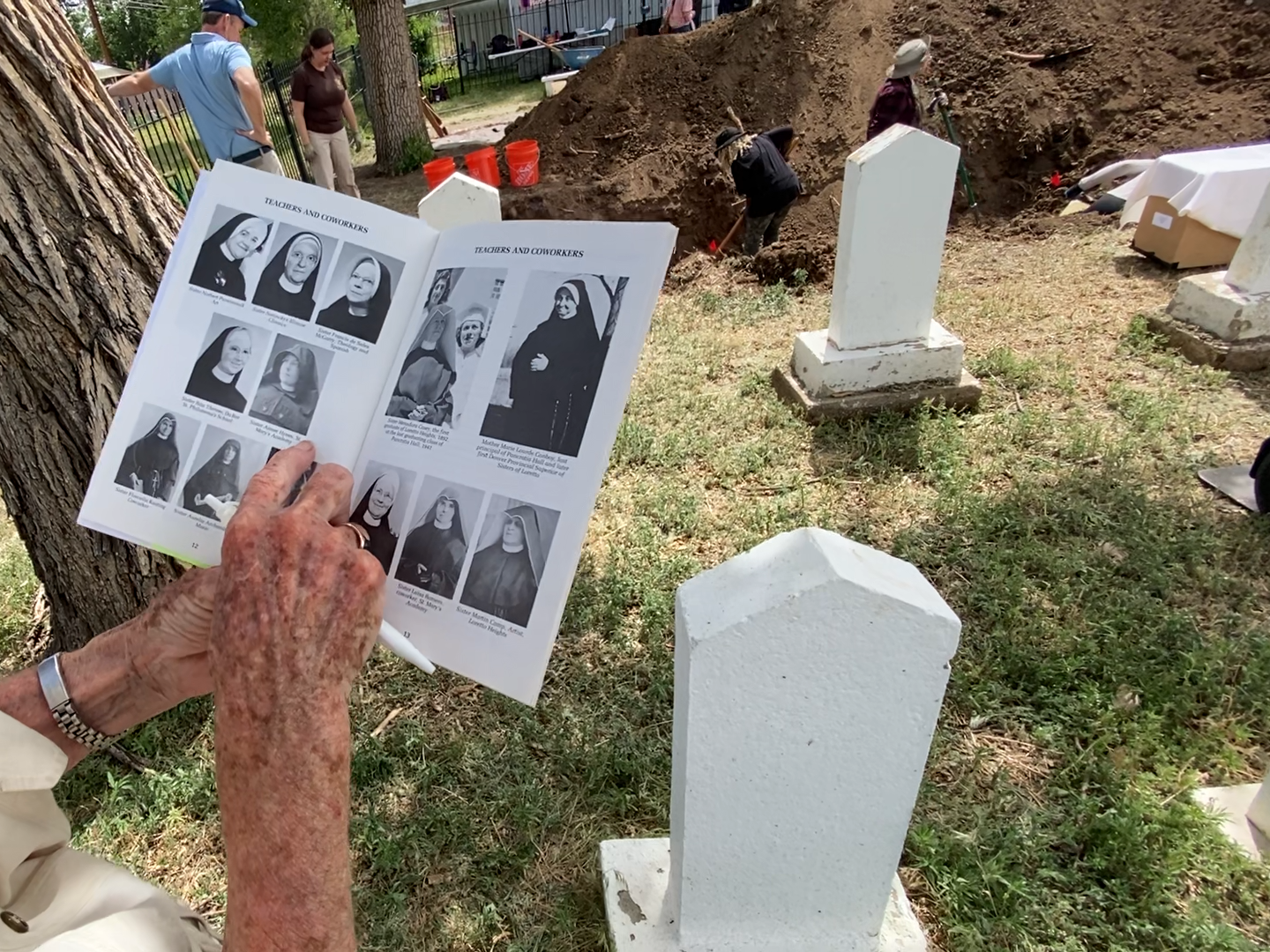
    In the summer of 2022, construction necessitated the relocation of a small 19th /20th century cemetery of nuns from southwest Denver. Before their reinterment, a team of local researchers and students worked with the Loretto Community to undertake a bioarchaeological analysis of the remains of the Sisters of Loretto. This ongoing project highlights community collaboration, […]