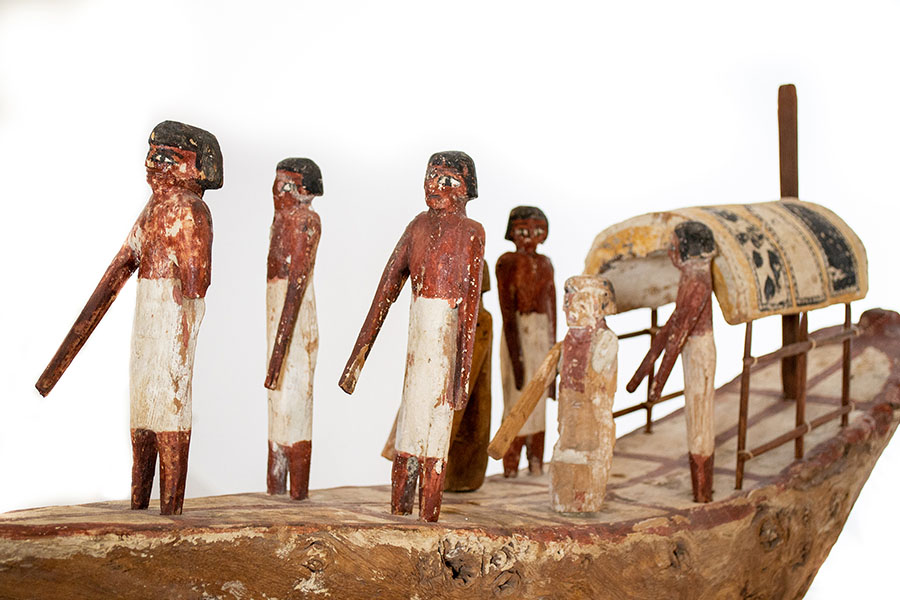
Much like today, ancient “consumers” were connected to distant markets. Both basic and precious goods from faraway lands “shipped” to royal palaces, elite estates—sometimes even rural households—and technological advances in craftsmanship and commerce transcended boundaries of language, religion, or culture to spread rapidly. Mediterranean Marketplaces explores how the movement of goods, peoples, and ideas around […]
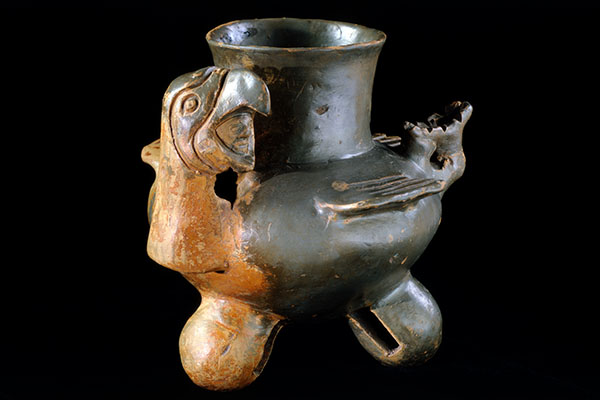
Muchos Méxicos explores Mexico’s rich history as a site of human innovation, creativity and cultural diversity. Featuring Mexican objects from the Peabody Museum collections, this bilingual exhibit tells the story of Mexico as a multicultural and geographic crossroads—one where the exchange of resources, products, and ideas among Indigenous peoples throughout the Americas before the Spanish […]
Until recently, the idea that people could have traversed large expanses of ocean in prehistoric times was considered pseudoscience. But recent discoveries in places as disparate as Australia, Labrador, Crete, […]
The American Research Center in Egypt, Northern California Chapter, and the Near Eastern Studies Department, University of California, Berkeley, invite you to attend a virtual lecture by Dr. Roselyn A. […]
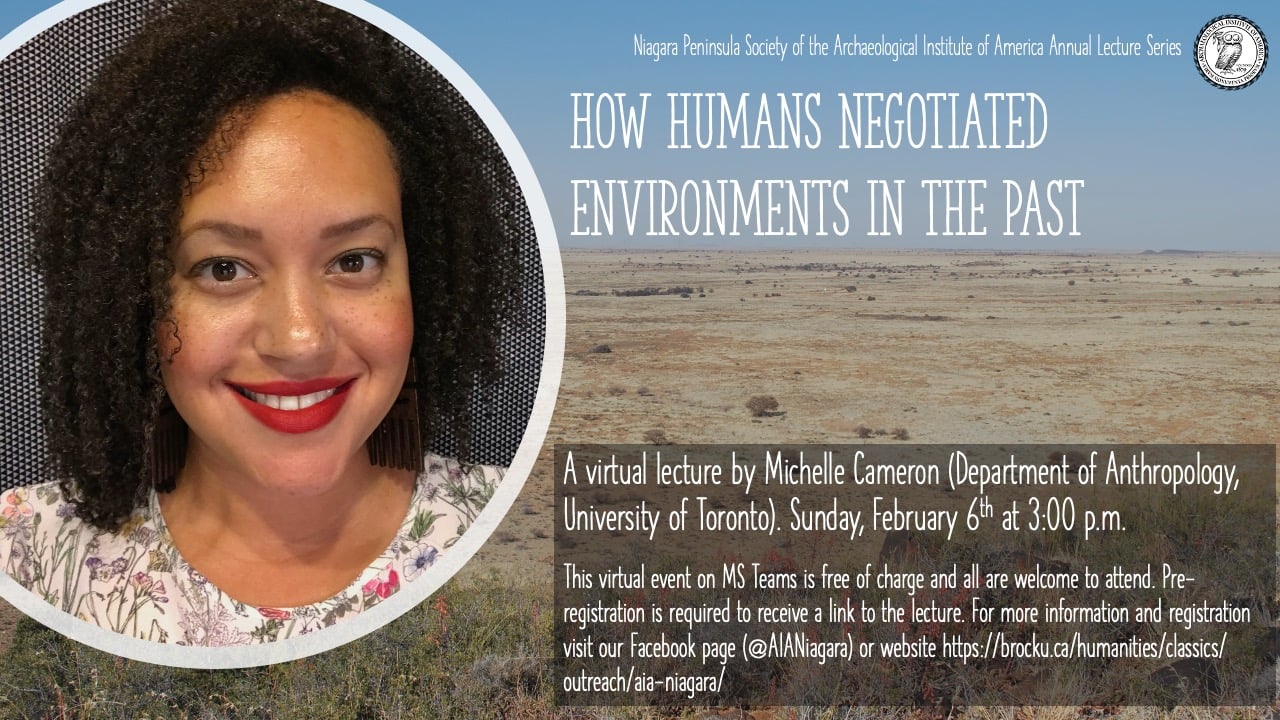
It's a new year and a great new slate of lectures! This winter, our lectures will be online using Microsoft Teams. We're very excited to present Dr. Michelle Cameron, from […]
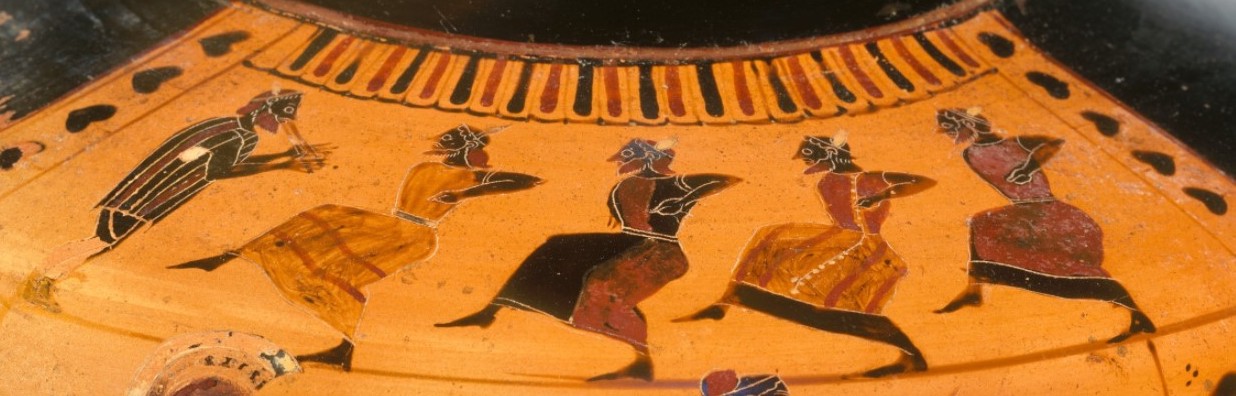
Lecturer: Anna Conser (Whitman College) This talk will introduce what is known about ancient music and the music of Greek tragedy in particular. It calls attention to the fact that the plays of Aeschylus, Sophocles, and Euripides were originally musicals, which featured spectacular song-and-dance sequences composed by the poets themselves. Unfortunately, no sheet music or […]
David M. Griffin, independent researcher and author with a Degree in Architecture from Carleton University, Ottawa, will speak about his work on the research techniques and findings from forts and battles of Fort Slongo and Lloyds Neck.
Cultural and educational institutions are still learning how best to overcome the limitations placed on our activities by the Covid-19 pandemic. In particular, archaeology has been drastically impacted by restrictions on international travel, and has had to find new ways to bring researchers, students, objects, and landscapes together in the study of the ancient world. […]
With the recent reboot of HBO's classic, Sex and the City, some may be asking themselves, "I couldn't help but wonder...(as Carrie often says in Sex and the City) what were attitudes about sex in the ancient Greek and Roman city?" Were there any Carries, Mirandas, Samanthas, or Charlottes of the ancient world? Join Dr. […]
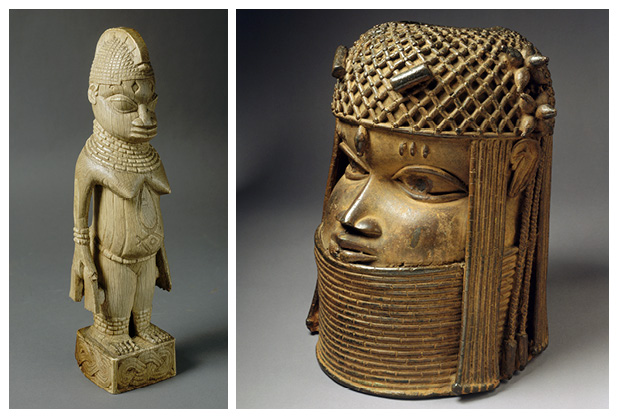
Sarah Anita Clunis, Director of Academic Partnerships and Curator of African Collections, Peabody Museum of Archaeology and Ethnology, Harvard University In conversation with Diana DiPaolo Loren, Senior Curator, Peabody Museum of Archaeology and Ethnology, Harvard University The kingdom of Benin, a highly centralized state founded in the thirteenth or fourteenth centuries in southwestern Nigeria, dominated […]
Lecture by Catherine Baker, Bryn Mawr College From the chipped corners of an ancient die to the mortar on a reused inscription, artifacts tell stories. Archaeologists reconstruct these object biographies, tracing the lives of ancient artifacts from their creation to their final deposition. In this talk, I explore the stories of some of the artifacts […]
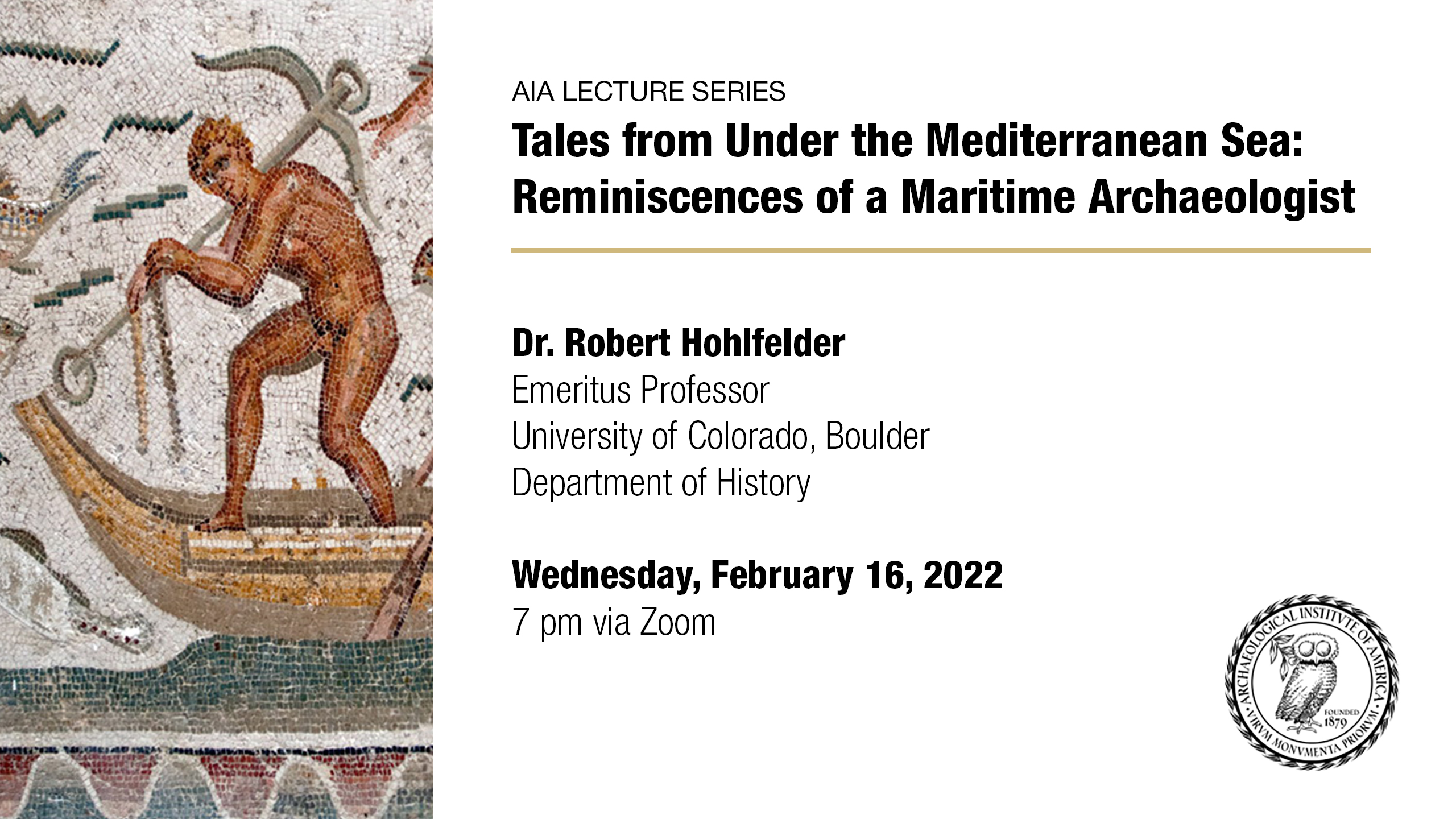
The lecture presented by Dr. Robert Hohlfelder (Emeritus Professor, CU Boulder), will cover some of the most amazing discoveries of his long career including: A Treasure Trove of 4th Century […]
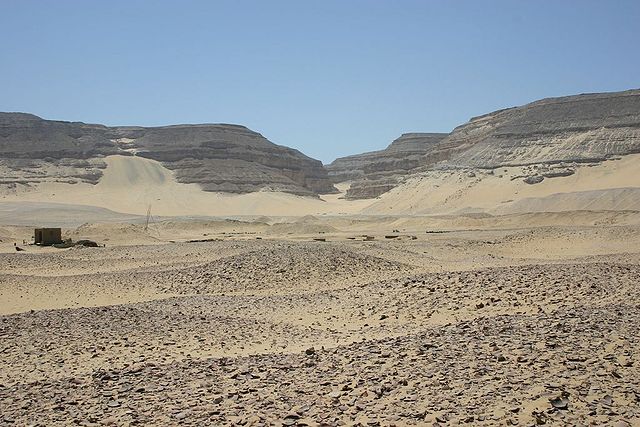
Acquiring amethyst in Ancient Egypt was a tricky business. But the cut raw amethyst, the amethyst mines, and the people in the desert all needed to be guarded. As part […]
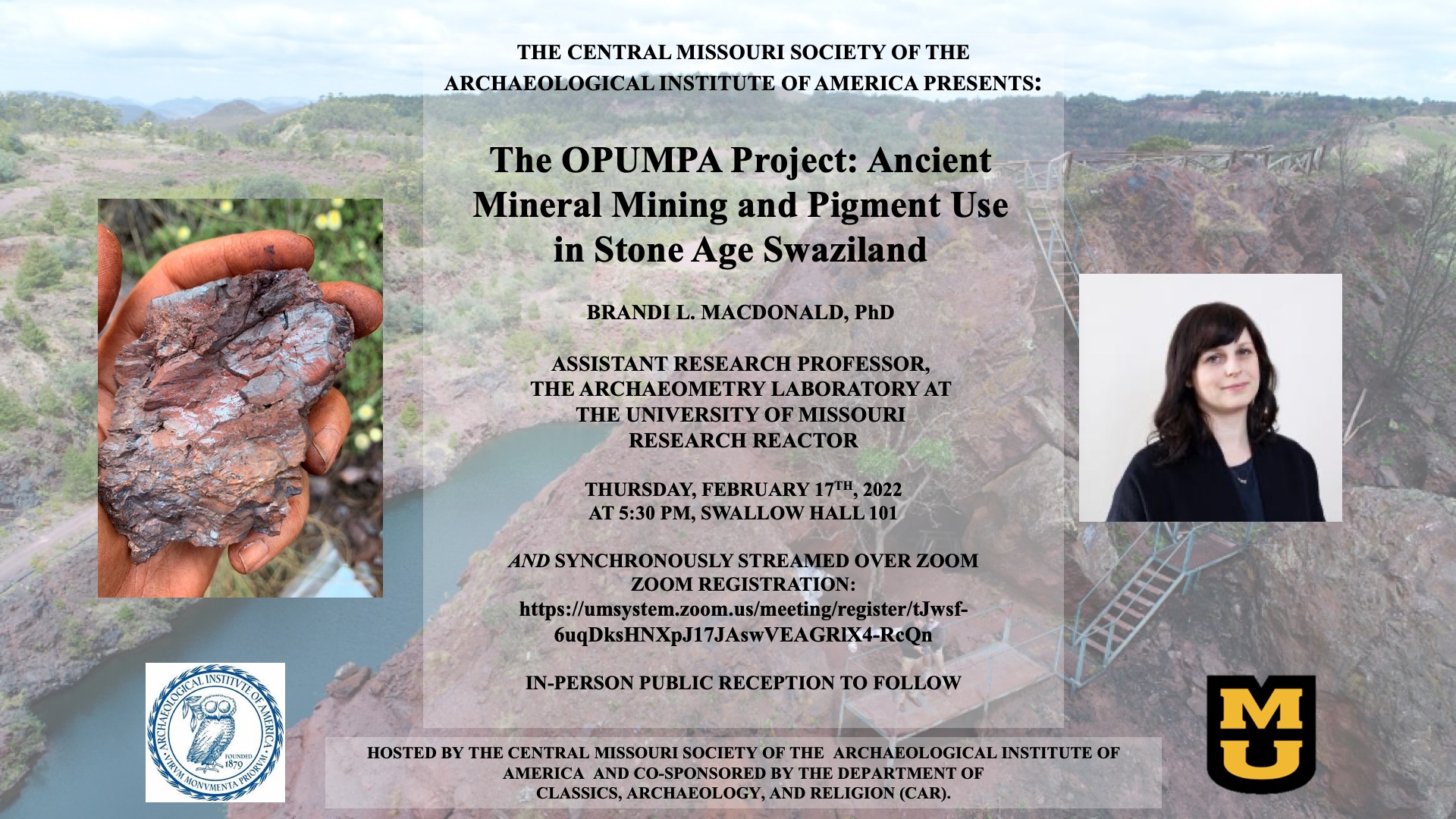
“The OPUMPA Project: Ancient Mineral Mining and Pigment Use in Stone Age Swaziland,” presented by Dr. Brandi L. MacDonald (Assistant Research Professor, The Archaeometry Laboratory at the University of Missouri […]
Dr. Kevin Dicus (University of Oregon) Roman imperial ambitions began with the occupation of Italy. The Etruscans, once the dominant civilization, experienced great cultural and political upheavals. Foreign traditions, goods, and belief systems entered their territories, challenging and changing their ways of being. Scholars have referred to the process as “Romanization”: conquered peoples adopt Roman […]
Dr. Lisa Anderson-Zhu (Walters Art Museum) will speak about "A New but Naughty 'Sam Wide Group' Kylix at the Walters Art Museum." Join via Zoom at the link below. The […]
The third century CE is arguably the most poorly understood period of the Roman Empire. Nonetheless, it is a critical time in World History, as it ushered in the transition of the Classical World to Late Antiquity and saw the end of the Roman system as defined by Augustus. One of the most consequential changes […]
Tuesday, February 22, 2022 7:30 p.m. ET Join Zoom Meeting https://davidson.zoom.us/j/99143304841 Meeting ID: 991 4330 4841 Anna Agbe-Davies, “The Mis-Education of Pauli Murray” About the lecture: This presentation considers education, […]
Join members and guests of the Archaeological Institute of America’s Iowa Society for a virtual conversation via Zoom about how to land a job in or related to archaeology. We […]
Sarah Anita Clunis, Director of Academic Partnerships and Curator of African Collections, Peabody Museum of Archaeology & Ethnology Located in the Kasaï Oriental Province along the Sankuru River in the […]
In the past few decades the Roman fort at Vindolanda has had some of the most extraordinary finds from the northern frontier of the Roman Empire that have truly changed our understanding of life in the Roman army. The site lies near Hadrian’s Wall in a remote countryside in Northumberland, England and was part of […]
Elizabeth M. Greene, Canada Research Chair in Roman Archaeology, University of Western Ontario (egreene2@uwo.ca) Research over the past few decades has shown quite clearly that women and children were part […]
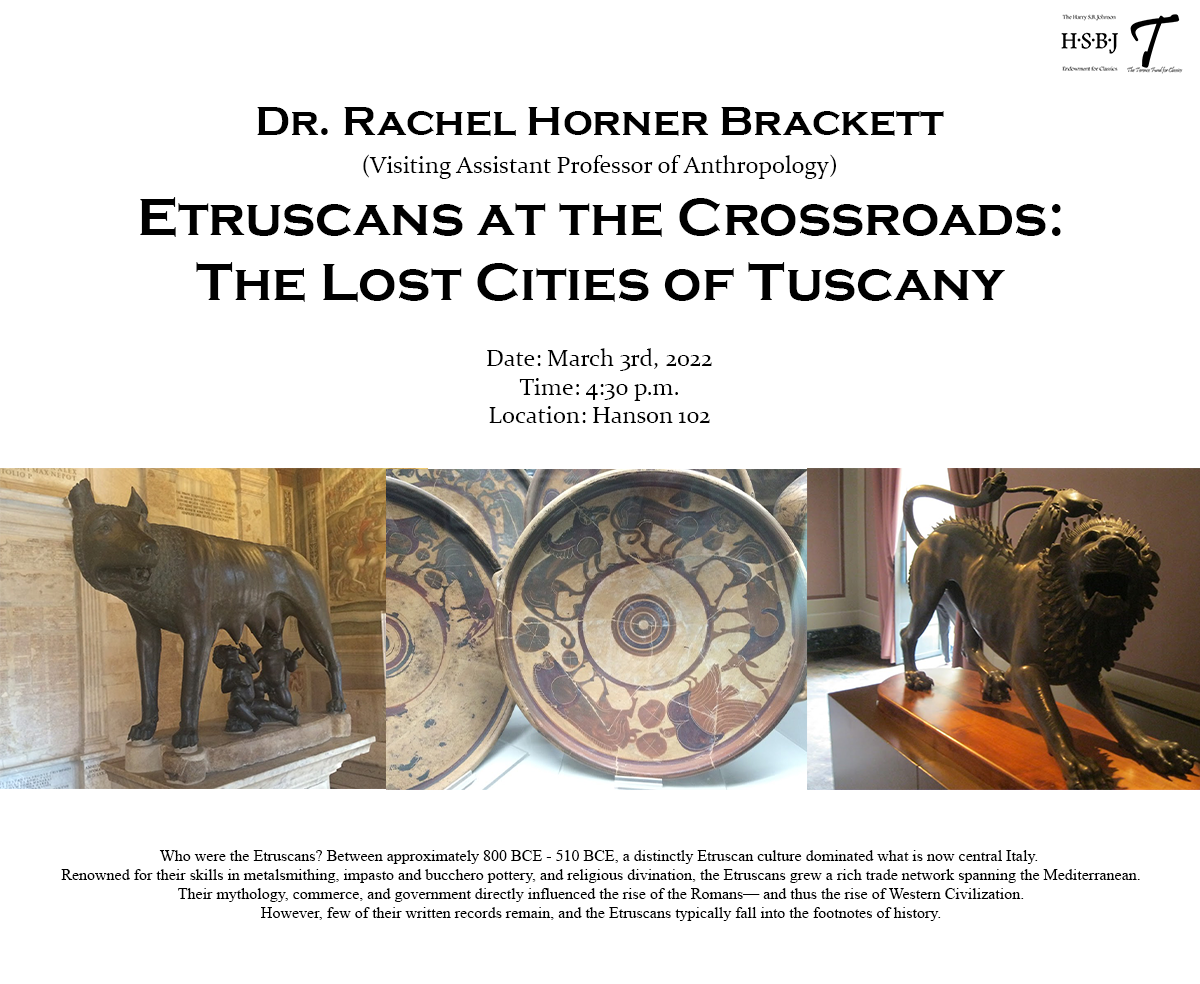
Zoomed lecture, free and open to the public. Rachel Horner Brackett Lecture - Etruscans at the Crossroads Thursday, March 3 · 4:30 – 6:00pm Google Meet joining info Video call […]
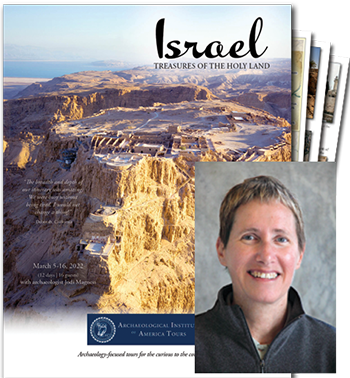
Discover the kaleidoscope of Israel’s archaeological riches in springtime. Highlights include iconic ancient and religious sites, including five that are inscribed on UNESCO’s World Heritage list: the spectacular, tragic fortress of King Herod at Masada; the Biblical Tel (settlement mound) of Megiddo; a view of Haifa’s Bahá’í Gardens from Mt. Carmel; the Jewish necropolis of […]